


Traditionally, the visual arts are among the strongest forms of artistic expression in Las Tunas. However, there are still challenges on the agenda, such as better defending Las Tunas' sculptural heritage, something that once earned us the epithet of Capital of Cuban Sculpture.
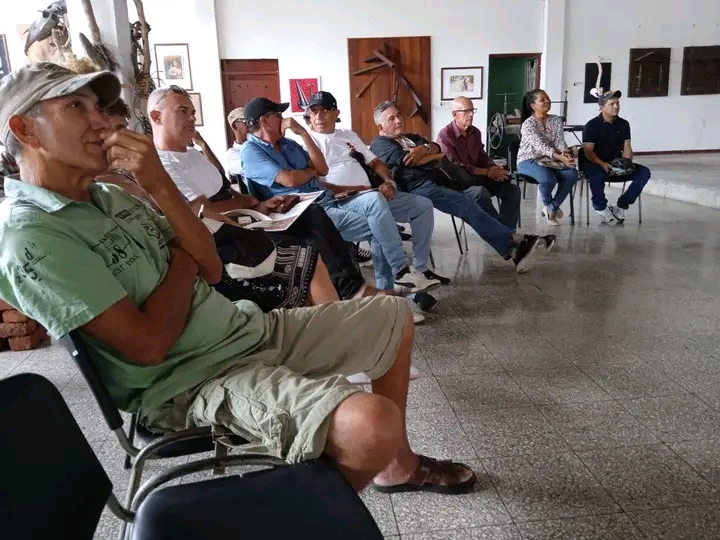
 Las Tunas, Cuba.- Aware of its strengths and weaknesses, creators and managers reflected on specific issues for the art form at the recently held annual review meeting of the Provincial Council of Plastic Arts (CPAP in Spanish) for the year 2025. The meeting, held at the institution's headquarters, provided an opportunity for introspection and consensus on healthy work paths.
Among the vital topics of the debate was how better defend our sculptures and other pieces located in public places, as several of them show clear signs of deterioration. In this regard, Maida Rodríguez, president of the CPAP, pointed out to 26 that one of the advances made last year was the delivery to the highest authorities of the province of a diagnosis of the state of the sculptures and other pieces located in the city environment.
Likewise, according to her, the responsibility of the agencies involved in the restoration of sculptures, murals, and other works was clarified, a step that will allow for better monitoring (we hope) of our two- and three-dimensional assets. Rodríguez praised the work of the Health and Community sectors and the restoration team at the Rita Longa Sculpture Workshop Gallery, which in 2025 carried out actions to revitalize certain pieces.
Another positive aspect highlighted by the board was the increased integration of the artistic avant-garde with new talent, as well as the attention given to art education students. This was demonstrated by the participation and quality of the works presented in the 132 exhibitions held last year, including La Plástica en Abril and various salons.
The strengthening of alliances with other institutions (in the cultural sector and beyond) also marked CPAP's work last year. "We are discussing links with the Union of Historians of Cuba (UHIC in Spanish), the Provincial Committee of the Union of Writers and Artists of Cuba (UNEAC in Spanish), the Hermanos Saíz Association (AHS in Spanish), as well as with universities. As a result, according to Maida, exhibitions, working meetings, tours of locations where sculptures are located, and presentations at theoretical events such as symposiums were promoted, allowing participants to learn about the history of the biennials here and other important topics."
 The development of the 13th Sculpture Biennial, after several years without being held; the workshops and other activities carried out as part of the celebration of the 40th anniversary of the Advisory Council for the Development of Monumental and Environmental Sculpture (CODEMA in Spanish); the expansion of the collection of the Rita Longa sculpture workshop gallery; and the linking of artistic projects such as Zona Creativa and BuscArte to high-impact actions were also results of 2025.
Likewise, several artists participated in prestigious events, including ceramist Nelson Téllez, who took part in the 30th Terracotta Biennial, in Santiago de Cuba and the Santi Spíritus Artistic Ceramics Biennial.
The young Liset Gutiérrez also participated in the November Photography Festival and other events; the guild was involved in the National History Congress program with allegorical exhibitions, and during the Cinemazul film appreciation festival, nine artists joined in with a collective exhibition that brought works related to the films in competition to the canvas, something new for that event.
However, there is still much to be done, and among the plans for 2026 are the repair of the CPAP headquarters and the improvement of the infrastructure of related institutions, the promotion of spaces for criticism, and the repair of a greater number of sculptures in poor condition, with an emphasis on the most emblematic ones.
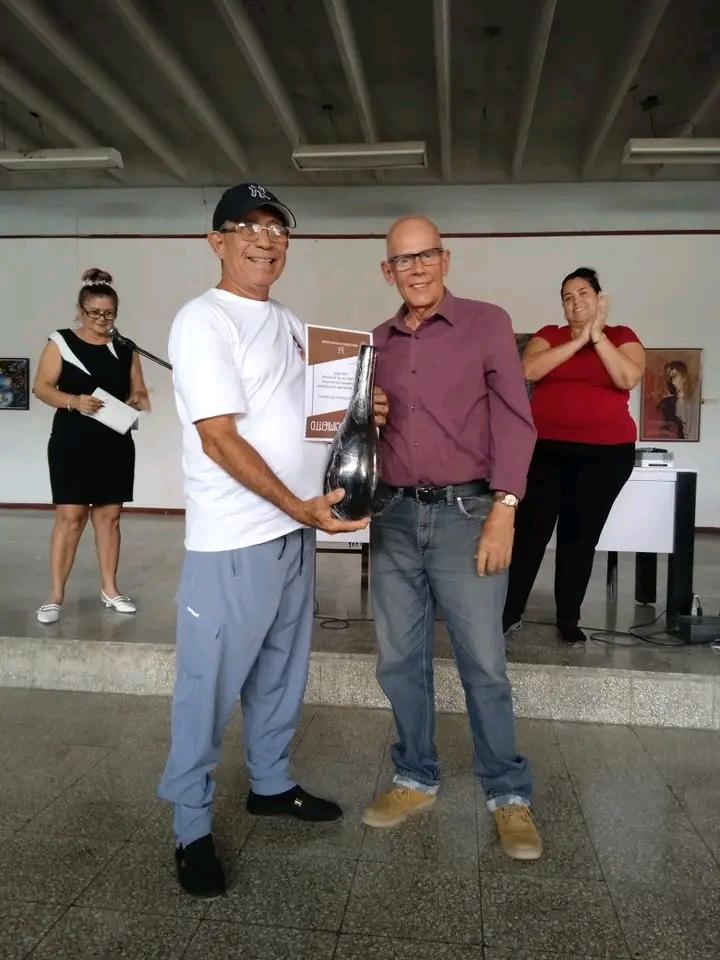
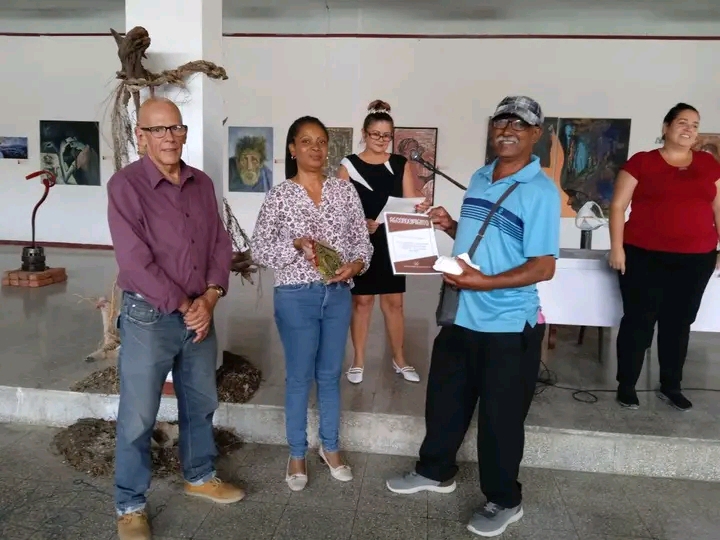
At this review meeting, there was also no shortage of praise for the most outstanding creators, as well as directors and institutions that, with a sense of belonging and willingness, contribute to hosting an event that distinguishes us in the province and beyond.