


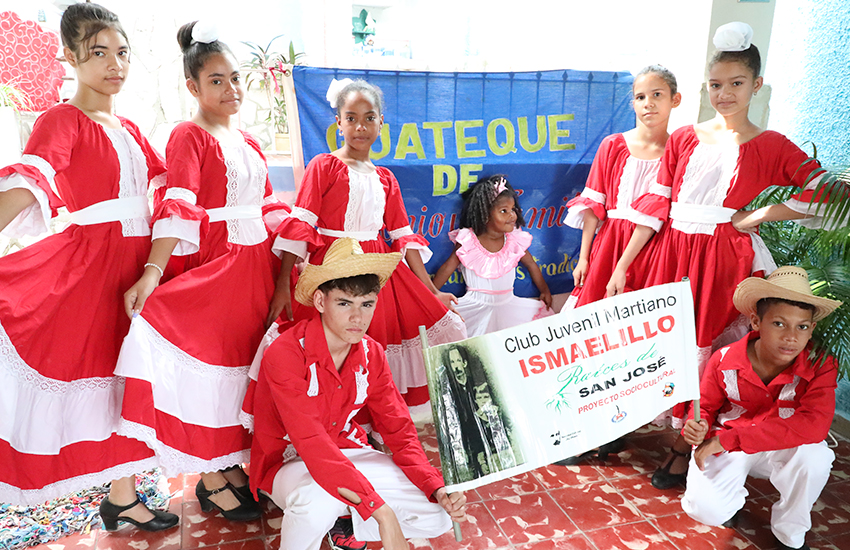
The Raíces de San José community project (Roots of San José), one of the most important of its kind in the province, is celebrating its 20th anniversary. Much has changed since the day Caridad del Carmen Ramírez Álvarez brought the initiative to life.
The leader recounts that Vicente's birthday, a child in the community, marked the genesis. With her heart aching from the recent loss of her daughter, she found a way to express her gratitude through art to the doctor who had done so much for “her treasure.” “One early morning, I was depressed, but the idea for the show came to me, and I wrote it down. The birthday celebration was a success. The cultural segment was in front of my house, on 8th Street, in the San José neighborhood. There was a parade and everything, with authorities in attendance.”
Today, the group comprises around 80 members who are passionate about music, dance, theater, and visual arts, with dedicated teachers for each discipline. Although they have undertaken numerous activities over the past two decades, for Carmen, each rehearsal is an adventure.
“Seeing the children, being infected by their joy, witnessing the impact on the community, the support of instructors from cultural centers and other artists, the arrival of instruments from the Center for Exchange and Reference on Community Initiatives (CIERIC in Spanish), these are things that leave a mark… Sometimes you get tired and don’t want to continue, but they lift my spirits; I’m happy,” she says.
“ISMAELILLO” AND A PARTY
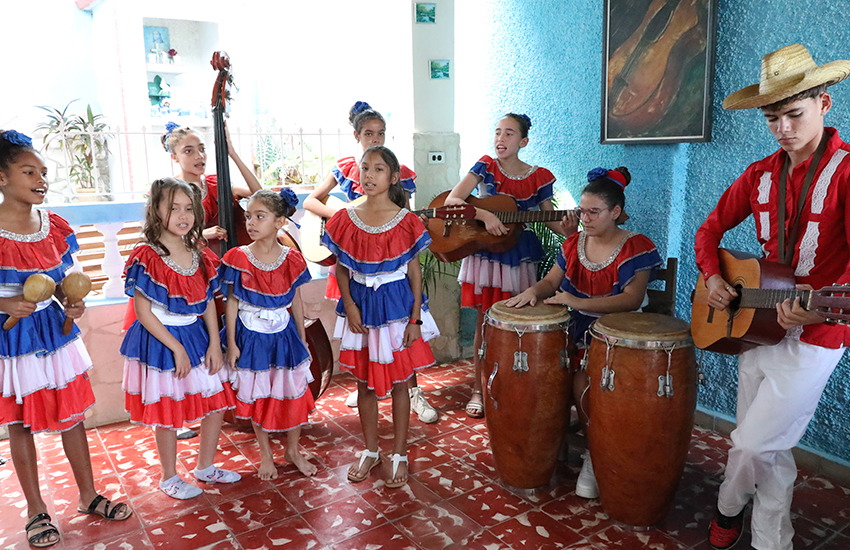
Among the events that mark the history of “Raíces…” is Antonio and Family’s Party. The gathering was inspired by the example of Carmen’s grandfather, who—as she recounts— “would walk for miles to make music with a group he had in his youth.” In his honor, the event was created on February 29, 2008. “The Guateque… distinguishes us; it features the music and dance group. It’s our signature activity, with a rural flavor,” explains Ramírez Álvarez.
The initiative has allowed them to share with figures like María Victoria Rodríguez and Antonio Iznaga, El Jilguerito. It’s been two years since the inspiration behind it passed away, but his legacy lives on.
On the other hand, Gretsy del Rosario Espinosa Ramírez, who has been part of the group since she was two years old, tells us about the Ismaelillo Martí Club, of which she is president. A visit from René González, one of the Five Heroes, marked the beginning of this initiative eight years ago. The young woman also mentions that they have been visited by important figures from the Martí Youth Movement (MJM), such as Elaine Cruz Cobas, national coordinator of the magazine Martillando.
“The club was created in conjunction with the MJM (José Martí Youth Movement) and the José Martí Cultural Society (SCJM in Spanish). The intention is to instill values in children, strengthen national identity, teach them the ideas of the Apostle, and help them become good people,” said the leader, who also serves as president of the MJM at the University of Las Tunas and belongs to the Provincial Committee of that organization, overseeing Social Outreach.
Ismaelillo, made up of 30 children, has helped form other Martí clubs and has received the Abdala, October 3rd, Young Homeland, and Useful and Good awards.
NEW ROOTS
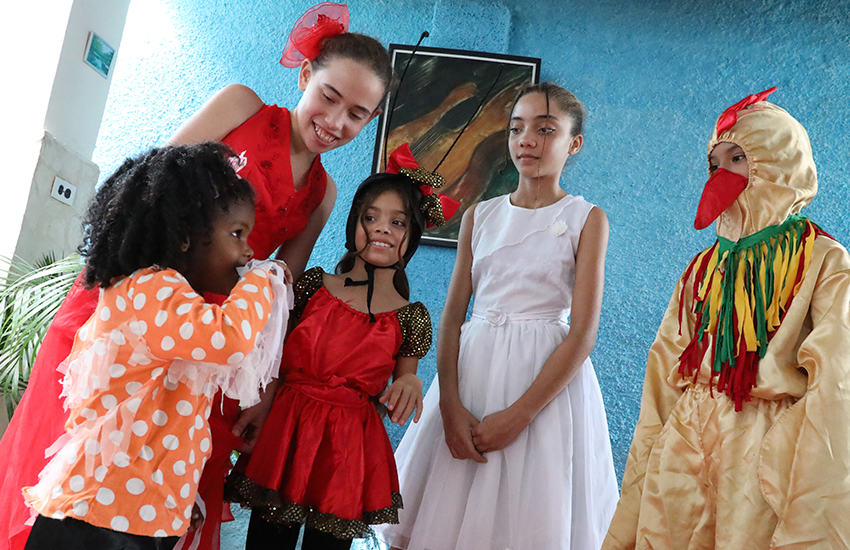
The children of the project are winning the hearts of the people. The Cucalambeana Festival is one of those events that have made their mark. They have also performed at venues like Cayo Saetía and at events such as the XV National Children's Theater Festival, organized by La Colmenita de Moa. Behind them are the dedication of teachers Ángel Luis Guzmán, Bisnalvis Valdivia Peña, and Katia García (dance); Lilliam Rodríguez, José Luis Laguardia, and Freddy Hechavarría (music); Damayanti Mena (visual arts); and Midelkis Blanco (theater). The recognition also includes them.
“I play guitar and the tres. I do storytelling, recitations, and other forms of acting. It’s a wonderful experience. I’m developing and, at the same time, I’m happy,” says 14-year-old Alejandro Rodríguez Escalona. “I like to perform poems and stories. When the audience applauds us, I feel fulfilled. I even want to study at art school,” says Lorena González Parra, who—at only 9 years old—sings, dances, and acts under the wing of “San José.”
For her part, 12-year-old Dalianis Santiesteban Pérez says, “I was 9 when I started here. I'm involved in theater, I play bass, and I sing. I'd like to be a professional artist in the future.” Ana Paula Borges Machado, also 9, is the lead singer and guitarist for the music and dance group Nuevas Raíces (New Roots). Through her voice, indigenous rhythms flow beautifully. “I've been part of the project since I was little. I'm also involved in theater and dance. Art fills my soul,” she adds.
THE COMMUNITY IS GRATEFUL
With the arrival of this project, the neighborhood's dynamics have changed. From the silence that characterized the place due to the lack of recreation to the flourishing that distinguishes it today, there's been a long journey.
Women artists, activities with children and seniors, partnerships with universities, and other initiatives have transformed the community.
Mislenys Carballal Castro, mother of 12-year-old Elennys, who has been part of the group since she was 6, knows this well. She explains how the children, in addition to developing their artistic skills, acquire values. Furthermore, “every time the neighbors know there’s an activity, they join in the preparations, whether it’s cleaning and beautifying the area or providing any other support,” she points out.
Yanisleidis Joaquín, a member, like Mislenys, of the project's organizing group, adds: “Thanks to this initiative, children and young people spend their time on healthy activities. They rehearse, acquire cultural knowledge, learn about unity and responsibility; it changes their lives…”
The project has garnered numerous awards throughout its history. The 55th Anniversary Seal of the Cucalambeana Festival, the commemorative plaque for the 195th birthday of Juan Cristóbal Nápoles Fajardo (El Cucalambé), and a recognition from the Ministry of Culture, signed by the head of the sector, Alpidio Alonso, are some of the accolades she has received. Carmen also holds the Living Memory Award, granted by the Juan Marinello Cuban Institute of Cultural Research, for her work.
“This project keeps me going. It has uplifted the community. Today, we don't talk about bad stories here, but about culture. I thank the neighborhood for trusting me and the parents who always support me. We are a family. Our only dream is to have a permanent headquarters,” concludes Carmen, clearly proud of the progress she has made.