


A comprehensive initiative continues across Havana to address critical public service challenges, including electricity provision, water distribution, and waste management. This effort, which began in early October, mobilizes resources from various ministries, state and non-state entities, and local leadership, with the active participation of the city's residents, all working towards the substantial improvement of the capital's infrastructure.
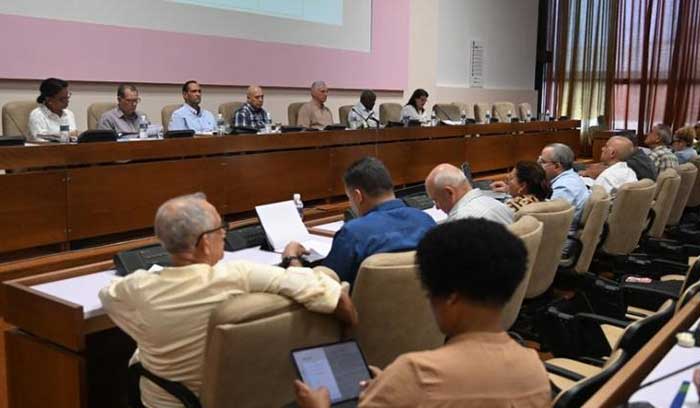
The latest progress was reviewed on Saturday in a meeting led by the First Secretary of the Central Committee of the Communist Party and President of the Republic, Miguel Díaz-Canel Bermúdez. He was joined by the President of the National Assembly of People's Power, Esteban Lazo Hernández, the Secretary of Organization of the Central Committee, Roberto Morales Ojeda, other senior officials, and Havana's top authorities. These weekend review sessions have been a recurring feature since October 3rd.
Governor Yanet Hernández Pérez reported incremental progress in water supply, with an additional 32,484 residents gaining access this week, building on the 165,148 previously reported. Despite this, significant delays persist in some areas, such as Regla and Guanabacoa, where supply cycles exceed ten days. President Díaz-Canel described this situation as "inadmissible" and unjustifiable, given the high-level priority and support allocated to the capital.
The head of state strongly criticized the persistent lack of attention and low priority given to an issue that severely impacts families, placing responsibility squarely on the municipal first secretaries, administrators, and other local authorities. He specifically inquired about the control systems for ensuring water tanker trucks reach the most affected neighborhoods and fuel is used for its designated purpose —a concern that also applies to waste collection operations, where efficiency and resource control remain lacking.
Regarding the city's garbage collection, which had reached a critical state, Hernández Pérez reported that 267,787 cubic meters of solid waste have been collected since the intensive campaign began, averaging 19,184 cubic meters daily. The municipalities of Marianao, Habana del Este, and Centro Habana are the furthest behind. Work has been carried out in 70 of the city's 106 popular councils, with plans finalized for the remaining 36.
The President emphasized the importance of attention to detail, insisting that cleanup efforts must include areas around containers, that damaged sidewalks — often broken by improper equipment — must be repaired, and that a systematic approach is needed for main avenues to "allow the city to wake up with a better image."
The meeting also addressed the electrical service, acknowledging improved scheduling of power outages but warning of an increase in damaged transformers. Officials also reported on work with non-state businesses to ensure strict adherence to their assigned electricity consumption plans.
On containing energy demand, the President stated that "new non-state management entities must emerge using renewable energy sources," and existing ones must gradually transition to this form of generation—a directive also in place for state investments. He stressed that compliance must be checked with the same rigor across all sectors. (CubaSí)