

Yanela Yero Rubio welcomed us at the very door of what has been her school all her life. It turns out that this young woman, a graduate of Primary Education from the Rita Longa Pedagogical Institute, has been the director of the Eliécer Botello School, in Majibacoa, for the past two years. That place stands out as her unique workplace in her nine years of professional practice.
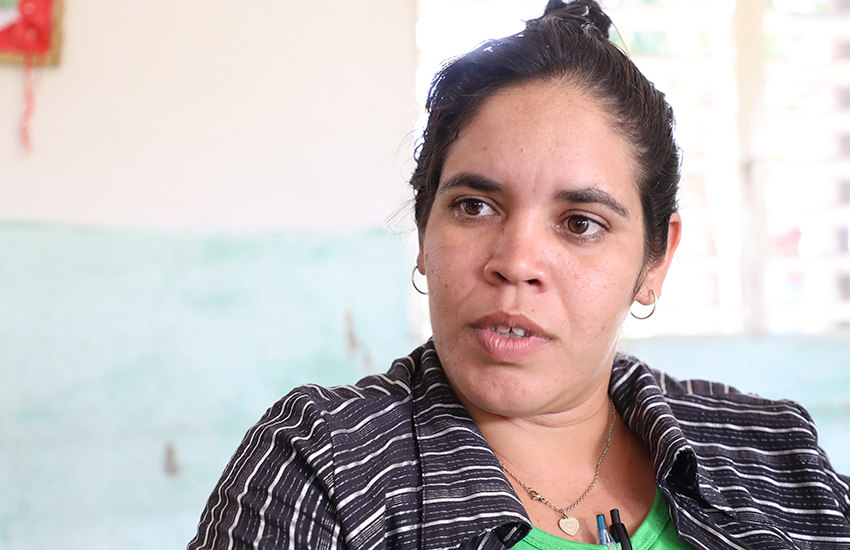 But she was a student in those classrooms; there, she discovered her first letters, and perhaps her passion for teaching was born there. Because she came to the profession by choice, life didn't pressure her, much less leave her without other options.
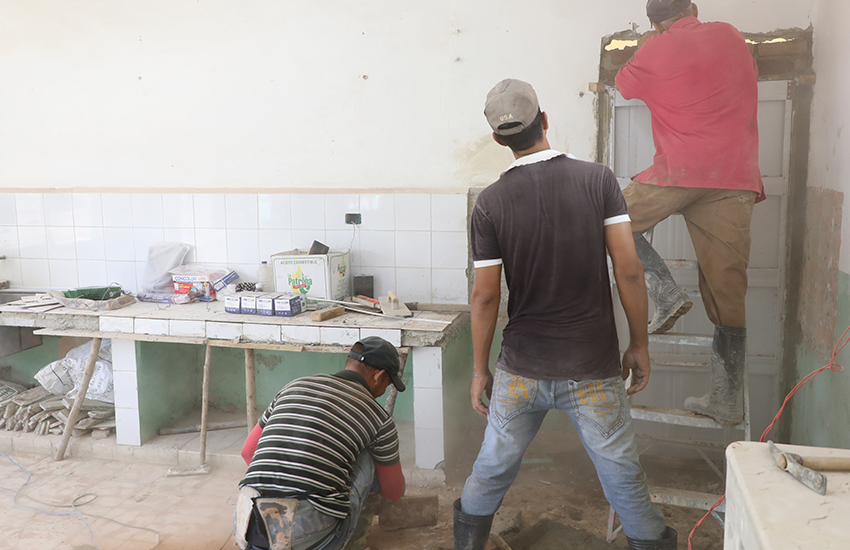
Yanela spoke with us amidst the dust of a special investment process; the "Eliécer Botello" will become a semi-boarding school starting September 1st. The second is in the geographically dispersed municipality of Majibacoa.
The Provincial Ceremony for the start of the school year will be held on its grounds. For this event, everything is being cleaned, adjusted, and detailed because the greatest effort comes from the community and its established teaching staff.
OPEN BOOK
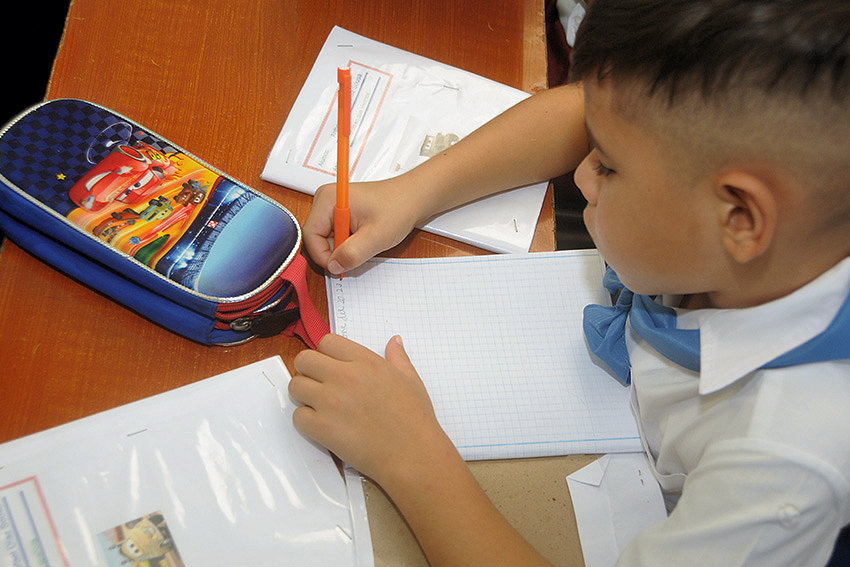
In Las Tunas, around 80,000 students are expected to return to classrooms this Monday, in a network of 630 educational institutions spread across the eight municipalities.
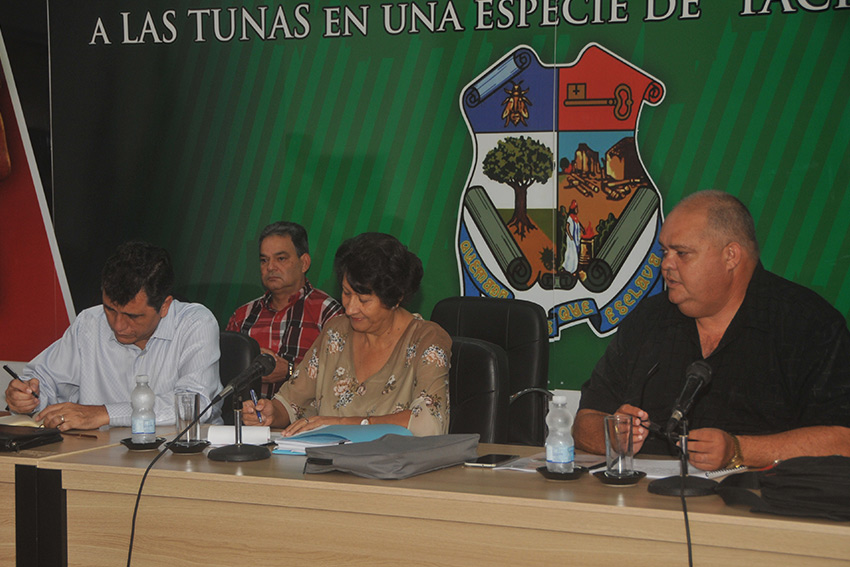
During a recent visit to these lands, the Minister of Education, Naima Ariatne Trujillo Barreto, made it clear that the new teaching period "is unlike any other we have experienced," and thanked the sensitivity and dedication of the sector's workers, whom she described as repeatedly "sacrificing" during her stay here.
WE RECOMMEND
Las Tunas Braces for a Successful School Year in the Current Context
Her statements are a clear sign of difficult times. Although our province is not the most complicated in this regard, it is a fact that 604 teachers are missing from the 12,042 existing positions. These numbers mean that teacher coverage is guaranteed at 95 percent. To address this phenomenon, which, far from decreasing, is gaining ground in Cuba, the most impactful proposals are the Educating with Love Initiative, led by young university students, and various types of hiring.
The teaching levels most in need of recruitment are Primary, which is short 232 teachers, and Basic Secondary, which requires 108. However, there are also shortages in Pre-university (50), Early Childhood (30), Special Education (16), Technical and Vocational (76), and Pedagogical Education (20).
The material conditions remain complex. Currently, just over half of the computers in Las Tunas schools are working, and 70 percent of the televisions. This means that 131 schools don't have a computer, and 354 have only one, affecting 29,504 students. Ninety-three percent of the necessary resources are available, including all workbooks, literature, posters, cards, and lesson plans.
No one is sitting idly by. Last year, Wi-Fi access was boosted at the Luis Urquiza Jorge Vocational Pre-University Institute of Exact Sciences (IPVCE) and the Rigoberto Batista Pedagogical School, and they are working to soon connect schools with commendable results, such as the "Rita Longa,” the Simón Bolívar Mixed Center, and the Manifiesto de Montecristi Agricultural Polytechnic Institute (IPA). This effort already benefits 356 institutions (54.4 percent of the total).
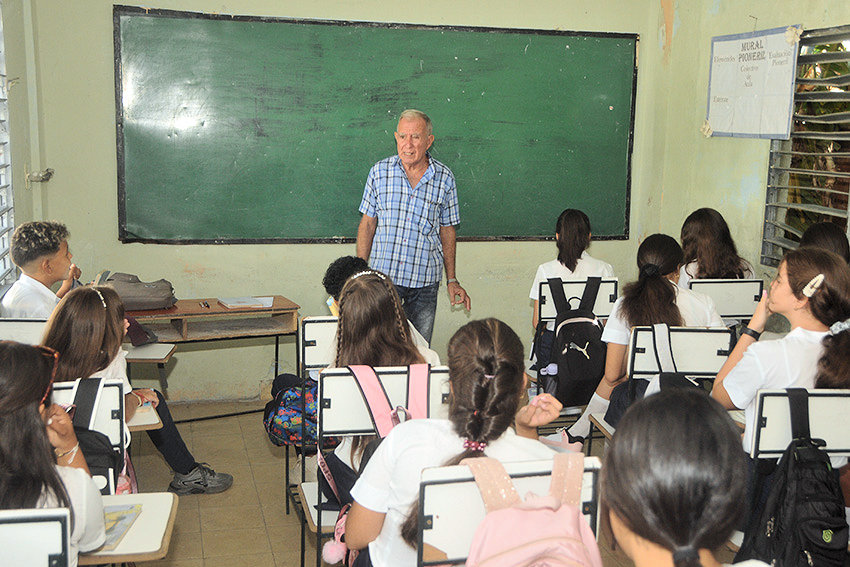
Last school year, the Balcón de Oriente guaranteed all places for the continuation of studies for the 5,108 sixth-grade students and the 5,017 ninth-grade students. Meanwhile, by the end of July, a significant group of young people had returned to school or work, so that, now, 60 percent of Las Tunas youth are in one or another mode.
The educational system in the province promotes support for the 3,018 students in vulnerable situations, for various reasons, who have been identified. Some have been supported with backpacks or places where they can eat lunch near their schools to facilitate their permanence in the classroom.
The sale of school uniforms is still a problem. Those responsible are striving to guarantee at least one per capita for the grades that mark the beginning of schooling; a situation present throughout Cuba, and unrelated to the raw materials, which have been in the country for several months.
Schools will continue to monitor addictions and their impact on students; they will align academic interests with the realities of the communities, and therefore need all the support possible from families to ensure a successful program.
Art Education, for its part, seeks to "compose" a good course. This was made clear at a meeting between the directors of the El Cucalambé Professional Art School and those who visited them from the National Center of Art Schools (CNEART). Issues related to the investment process, the school's projects, and the comprehensive teaching coverage set the tone for an always enriching debate.
STRENGTH AND ENCOURAGEMENT
Amid the complex panorama the country is going through, this period promises resilience. According to those leading the process, supporting education is among the Revolution's priorities on every imaginable front.
Therefore, the 2025-2026 "chapter," to be inaugurated in a few hours, must be written with special determination. For added encouragement, it will be dedicated to the centenary of the birth of Fidel Castro, our compass and inspiration in every challenge.