

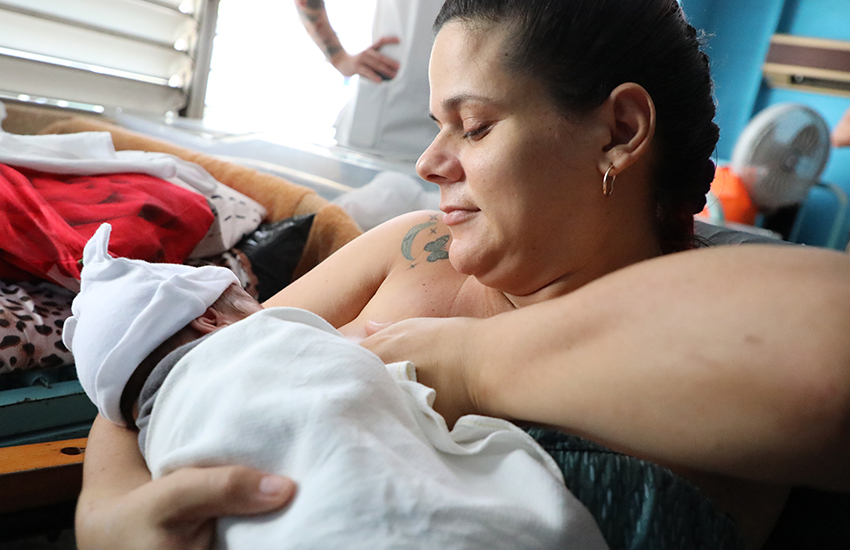
When the mother of a 16-day-old baby walked through the doors of the Guard Corps at the Doctor Ernesto Guevara de la Serna General Teaching Hospital, the sound coming from under the sheets mobilized the medical team. She said that her little one had been vomiting for three days, but that morning, he had started crying strangely. And indeed, he was.
Dr. Eriseth Núñez Ricardo, a third-year resident in Neonatology, recalls the difficult days that followed. "The child was complaining, a sign of respiratory failure in newborns. Upon examination, severe dehydration was evident, and it was decided to ventilate him immediately because he even had generalized cyanosis," says the doctor.
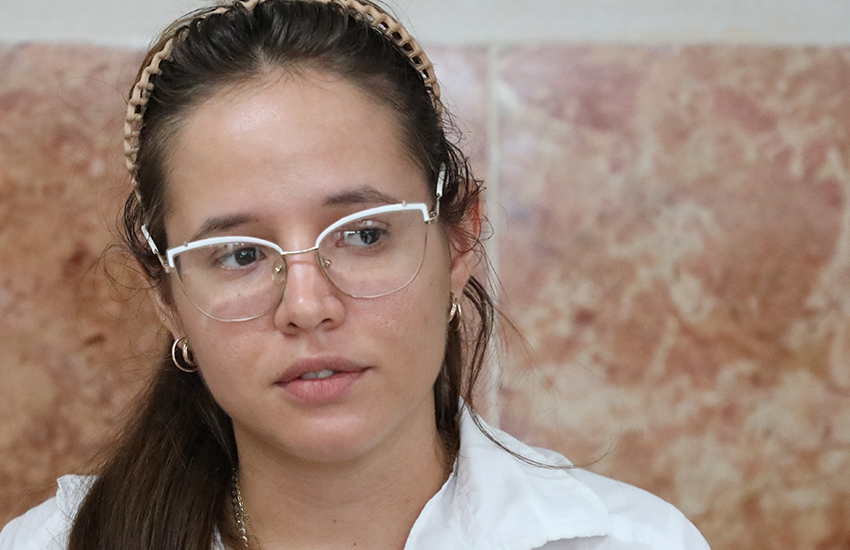 "The baby was in critical condition. I remember that the abdominal distension on the X-ray was alarming, and in the interview with his mother, she denied having given him anything other than breast milk. All the necessary tests were done, and the result was a significant internal imbalance."
"It was difficult to stabilize his body, no matter how many medications we administered; it depended on his response, and we are talking about a 16-day-old child. We began to treat him as if he had poisoning, but the baby did not improve. He faced the risk of perforation, and we consulted with Pediatric Surgery and specialists in the province of Holguín."
“On the third day, after much insistence, the mother confessed that she was giving him cherry tea because the little one was not filling up and she had been advised to do so to help him gain weight and sleep better.”
...
Cherry tea is not the only concoction that mothers in Las Tunas are currently giving their children, at the risk of endangering their lives from the very beginning. Nor was this case, which fortunately had a positive outcome, a rarity for the Neonatology medical team; they have much sadder stories in their collective memory.
“We are alarmed by the number of babies who arrive poisoned because, in the 21st century, women and families still do not understand that exclusive breastfeeding is best for the baby, that any anise tea, rice water... can cause enteritis in the newborn and put them at risk of death,” points out Dr. Núñez Ricardo.
"It is also worrying that there is a lack of honesty and that these behaviors are denied; this is time that is lost in reaching a timely diagnosis and minutes that are lost in achieving proper management. Sometimes a couple of hours makes all the difference."
“We continue to see that breastfeeding is subject to many myths and cultural interpretations that endanger the health of infants, and it is important that this understanding be realized in primary care, in doctors' offices. Pregnant women and their families must be educated, because breastfeeding requires support and backing, and right now it is imperative.”
WHEN IGNORANCE HURTS
It is not uncommon to see a woman who has recently given birth in a state of despair and with tears in her eyes, especially if her baby won't stop crying because he is hungry and she does not have enough milk to satisfy him. Stress in the postpartum wards is often a constant factor. And the pain on the mothers' faces is also almost tangible.
"There is a lot of ignorance that causes stress. We are shocked when mothers say, 'I don't have milk, the baby isn't full, all I have is water. We see them in the ward, they cry, the baby cries too, and the situation becomes very complex. Many immediately say, ‘I want them to give me some formula to solve this problem,’ and that is not the solution," warns Dr. Núñez Ricardo.
"Some babies cannot tolerate formula; they get diarrhea and vomiting, which causes enteritis, intestinal perforations... It's even worse if they are given aniseed tea, aniseed syrup, cherry syrup, rice water, sweet potato juice... The case that struck me most was a mother who chopped up pieces of papaya and gave them to her baby in milk to help him gain weight. This caused him serious complications.
Breast milk is the only optimal food at this stage and adapts to the quantities and needs of infants. Any changes should always be discussed with a healthcare professional; this is non-negotiable.
Here we also see women who do not want to breastfeed because they have cracked nipples or do not want their breasts to sag. The issue is very complex, but we cannot tire of repeating and educating. Breastfeeding is life and cannot be replaced by anything else."
The doctor warns that the mother cannot be alone. Breastfeeding requires support, and the family plays a vital role in its successful development. If family members are anxious, the mother will be too, and so will the baby. On the contrary, a stable environment and the necessary rest guarantee a healthy process.
The decision to have a child must be made collectively, but if this does not happen, it is vital that someone provides food and accompanies the woman, who may be experiencing hormonal chaos or even the worst moments of her life due to a lack of knowledge.
GUARANTEE OF LIFE
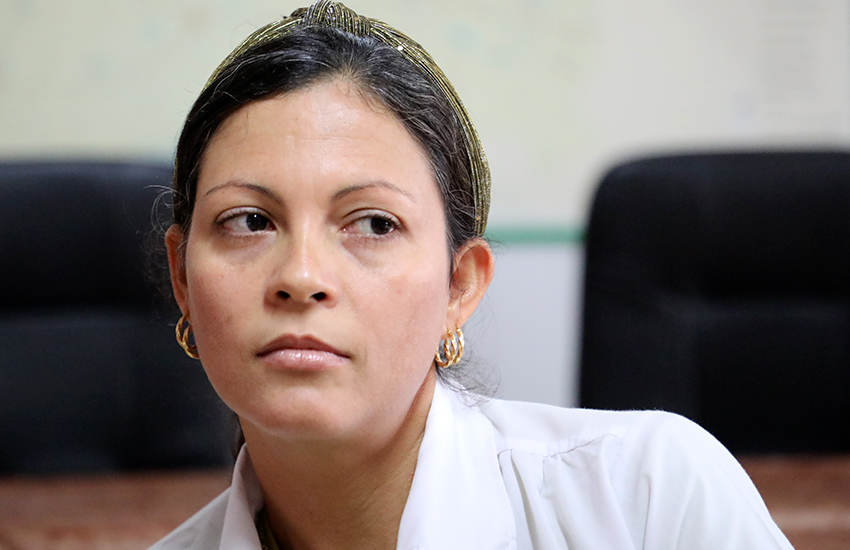 Dr. Yanet Domínguez Castilla, head of the Milk Bank, also shares this concern about breastfeeding. She says that in her daily routine, talks and interviews in the maternity wards have become constant, and even so, she feels that there is still a long way to go.
“The goal of our bank is to collect milk to benefit children in the Neonatology Department whose mothers, for various reasons, cannot breastfeed them. Getting new mothers to donate voluntarily is also quite complex for us right now,” says Dr. Domínguez Castilla.
"And everything is subject to the same issue: the myths and false beliefs of the Cuban population about breastfeeding. Even though we have managed to raise people's academic level, there is still much ignorance. Every day we hear: ‘My mother did it this way and had seven children,’ 'I was raised on rice water and I was always very healthy,' and many other things that are simply incorrect."
"In our case, the myth is that if you give your milk away, you will run out and therefore cannot donate. That is wrong. The more you express milk, the more your body produces, because that is what it is designed to do. We talk a lot with new mothers, explaining how to breastfeed and that what they are giving their babies is a treasure, a natural defense against any disease."
"We clear up many doubts, such as how to promote milk production and how to massage, but we feel that they come in very unprepared. We are very struck by teenage mothers, which is a constant right now. They bear the brunt of all the malpractice of their relatives because they do not have the maturity to make decisions."
“We explain to them that women with a lot of milk should pump first so that their baby receives the final milk, because it contains more calories and protein and will therefore nourish the baby better. So, they must donate the first milk.”
Similarly, the specialist says that they always suggest that breasts should be emptied at each feed, which does not happen in the early days because the baby consumes little and therefore does not receive the best quality milk.
Yordana Magaña, in her role at the bank, says that the postpartum wards are experiencing difficult times. “We are particularly affected by teenage mothers; they don't understand our reasons because of their low level of education and the myths they were raised with. The economic problems we are all familiar with make feeding more complex and therefore breastfeeding too.”
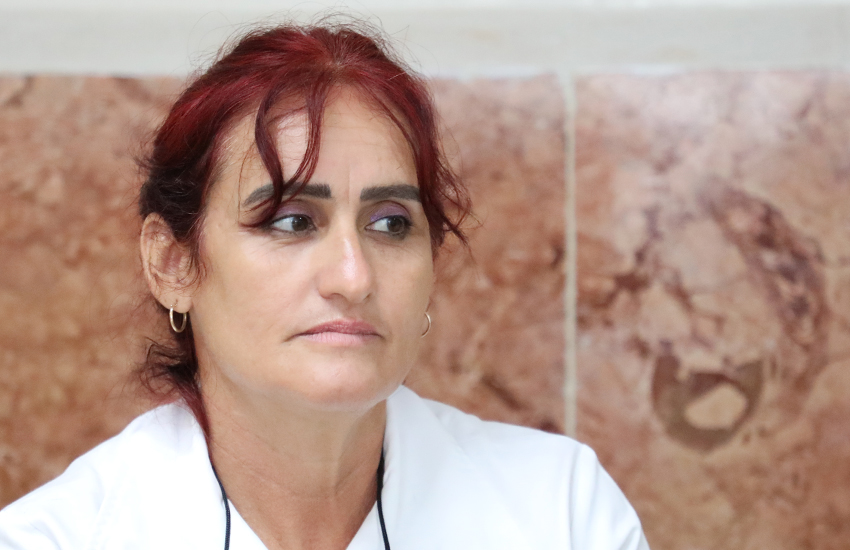
The story of María, a baby who spent four months in the premature baby ward with several complications associated with her low weight, is told in detail by the professionals at the Milk Bank. The girl demanded the product every day, and they searched high and low for it. Understanding this need is also imperative today.
...
Talking about breastfeeding, in the warmth of the home, from the moment children are born, is a requirement and a guarantee of life. It is also necessary to include the subject more rigorously in the training of healthcare personnel, as well as to bring this knowledge closer to future mothers and their families. The stories in these lines are only one percent of the reality in Las Tunas. Don't let myths cloud your baby's happy development.