


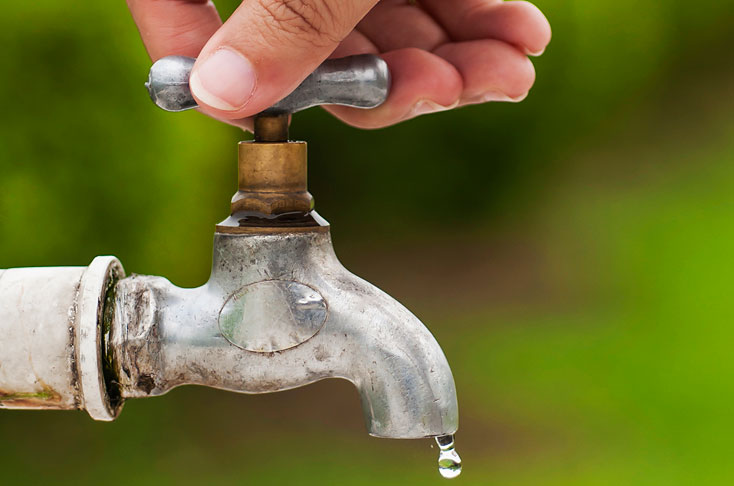
Water supply issues persist in Las Tunas province as drought continues. The harsh and diverse stories surrounding this situation are increasing.
Las Tunas, Cuba.- Official figures confirm that, right now, more than 90,000 people in this capital city are suffering the direct effects of this shortage; unfortunately, entire neighborhoods will not see any improvement in the short term.
Once again, the terminal points of waterways and the highest areas in the city's geography stand out as disadvantaged. These dilemmas have been addressed in many ways in 26 Newspaper, and always come up against the economic barrier that prevents greater investment and, of course, the open dissatisfaction of those who label this media outlet as "conformist" for not publishing definitive relief.
But here we are again, knowing that when you don't have water at home, explanations are unnecessary, and anyone who tells you anything other than a concrete solution joins the grim list of "guilty parties." As a colleague would say: "occupational hazards."
Managers sometimes feel the same way; at least that's what we sensed after talking with David Legrá Hernández, the young director of the Water and Sewerage Base Business Unit (UEB) in the main municipality.
"The circuits are monitored, and we have a list of key points at the command post, which tells us how far the water is reaching or not. But there are other obstacles as well; for example, the electric service of most of the pumps is no longer protected. They have even gone an entire night without electricity.”
"Water from Piedra Hueca takes up to three hours to reach the city from the moment you start pumping, and if you have a four-hour interruption, we're talking about seven without an effective supply.”
“The Cayojo Dam, to cite another example, takes more or less two hours to fill the cistern, which increases the difficulties. During these intervals, the pipelines run empty; then, when you turn on the service, it takes even longer to fill.”
The director explained that everything possible is being done to protect the distribution days and cycles; but, he asserted, good intentions are not enough, and it is also essential to reduce water consumption to protect the reserve a little, because if all four pumps are turned on, he confirmed, there wouldn't be a drop left in the reservoir.
“In 'El Rincón', we have a generator, which helps a lot, but some areas are much more complicated. One of them is Bartle. There, we have two circuits, one in Camagüey and another here, in Las Tunas. And they never connect. It's very complex.”
The situation is further complicated by indiscipline, the limited availability of water reservoirs in homes, and the limited focus on saving that many people have in the current circumstances.
A whole network of problems that has yet to find a solution; a reality that far from diminishing points to becoming even harsher in the coming months, because there has been little, too little rainfall in key areas such as the La Cana basin.
Also, the number of aging pipes outnumbers the possible ways to optimize them. It's worth noting that debts for repairs to pipelines and other elements are too many for a growing city, which already lacks supply sources and distribution mechanisms.
The truth is that water is still not reaching many homes. 26 shares the reasons once again as part of our social responsibility and with the certainty that, although much of the solution is beyond the real possibilities of this province, only together, with a keen attention to detail and extreme sensitivity, we could partially reverse the crooked path of water.