


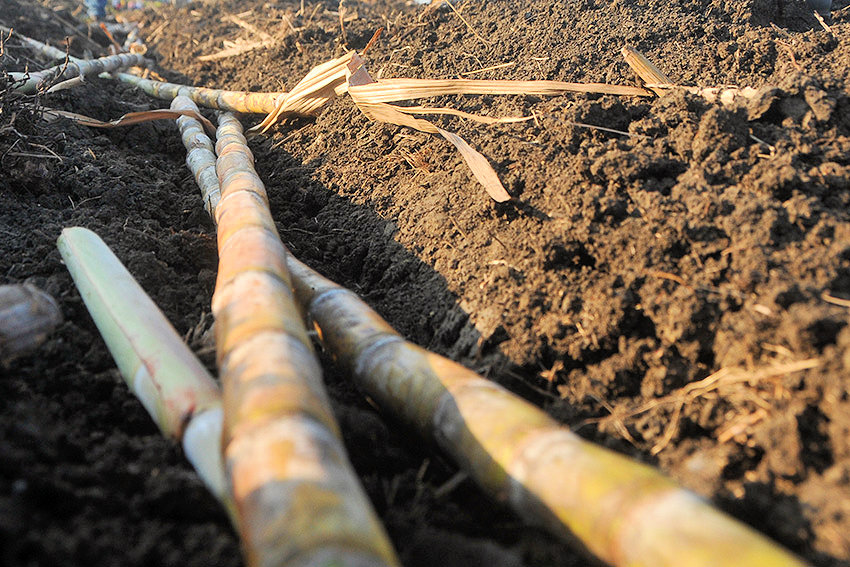
With the greatest burden on its shoulders in the effort to save Cuba's sugar agroindustry, and the challenge of continuing to move forward amid many shortages, the sugarcane cold season planting is reaching its peak.
Las Tunas, Cuba.- It is between September and October that Las Tunas farmers must plant the bulk of the 1,897 hectares planned for the second half of the year, so that by November and December, only those with irrigation possibilities remain.
This means working all the time, day after day, as productively as possible, unless the lack of resources and moisture imposes partial intervals.
Producers are entering the current campaign after a spring season (first half of the year) in which, although they only planted 77 percent of the 3,818 hectares planned, they managed to exceed the area planted in the same period in 2024 by more than 1,000 hectares.
Of course, this is no cause for praise and applause, especially since none of the companies fulfilled their respective commitments. However, this balance reveals a performance that generates expectations, as it shows that progress can be made despite the harsh environment.
It is also encouraging to know that the increase was a collective effort by the four sugar companies based in the Balcón de Oriente (Cuban Eastern Balcony): "Majibacoa," 454.8 hectares; "Antonio Guiteras," 446.6; "Amancio Rodríguez," 94.4; and "Colombia," 59. The task, now, is to consolidate positions and continue advancing through a winter period that can and must be successful.
This possibility was hinted at by Luis García Mercochines, cane coordinator for the Azcuba group in Las Tunas, when he pointed out that when signing the plan, each company took into account the areas closest to the mill and the availability of fuel, lubricants, and greases. Under this premise, “Colombia” plans to plant 97.8 hectares; “Amancio Rodríguez” 143.8; Majibacoa 562.6, and “Antonio Guiteras” 1,092.5.
All production units and sugar companies must prioritize this strategic mission and utilize all available material resources and human potential to support it.
It is not enough for some to comply and others not. The province needs each entity to guarantee its own planting, advancing section by section, but in a sustained manner, especially in Amancio and Colombian soil, where sugarcane production is in a critical state, having fallen almost to ground level.