

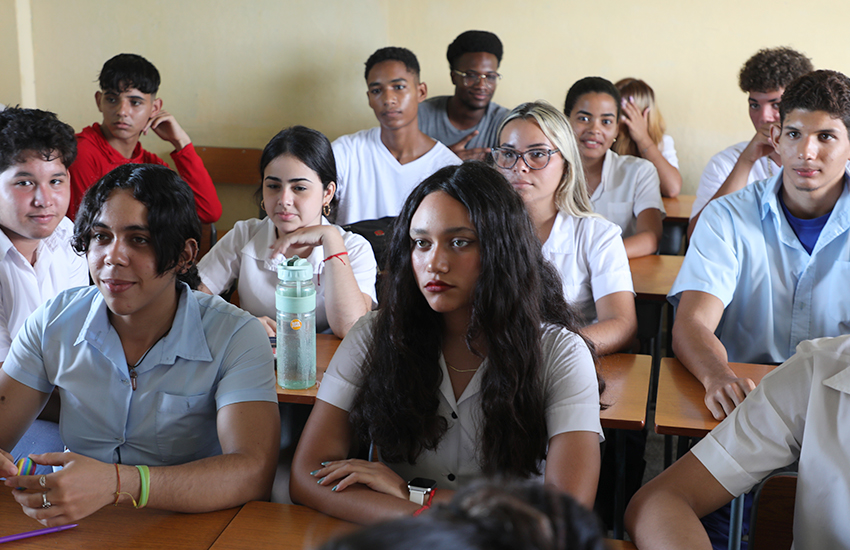
The white of Dayan's twelfth-grade uniform shirt now blends in with the lab coats of the students at the University of Medical Sciences (UCM in Spanish) in Las Tunas. September found him working on a project that already ranks among the most notable of his 17 years. The University College has made him open up more to a dream that, he says, grew with him.
Las Tunas, Cuba.- From a very young age, when asked what he wanted to be when he grew up, Dayan invariably replied: a pediatrician. The recent scars on his leg reveal in some way where his vocation comes from.
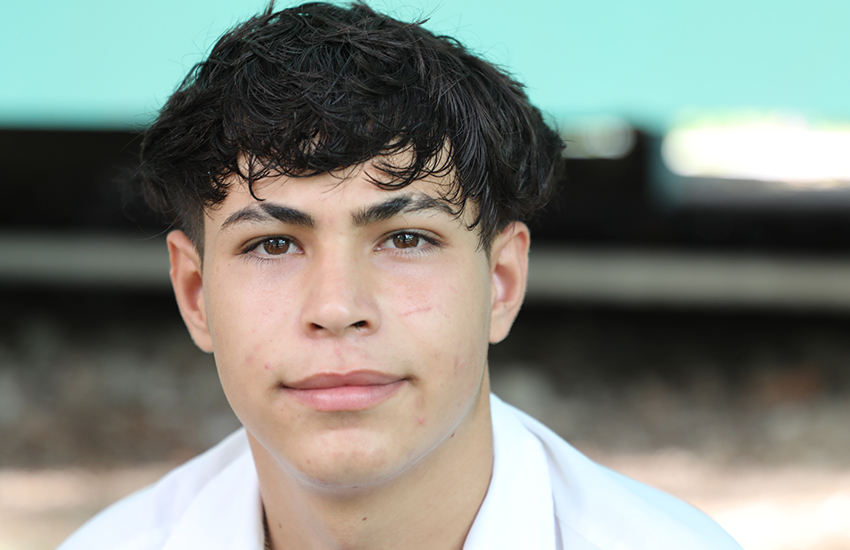 "I've had a lot of bone problems since I was a child. I suffer from chondromalacia in both knees. I recently had surgery for a bone cyst, and I have several microfractures in my right leg. Seeing the work of orthopedists up close convinced me that it is a specialty I would love. I recognize that I have a long way to go, but I know firsthand the value of their work.
“I've been amazed by the laboratories here. I've seen so many interesting things, human organs I never imagined; I feel that this experience is exceeding my expectations. It's a big challenge that requires maturity and study, but, at least in my case, it has made me understand what the career is really like and the responsibility that comes with wearing a white coat,” she says.
Rosalía has a sparkle in her eyes that is difficult to hide. Behind the microphone, she says that since she started college, she feels like time is flying by. She enthusiastically recounts that until a few weeks ago, seeing a human brain seemed surreal to her. Still, now she can add fetuses, cadavers, and even mouse kidneys to her list of professional sightings.
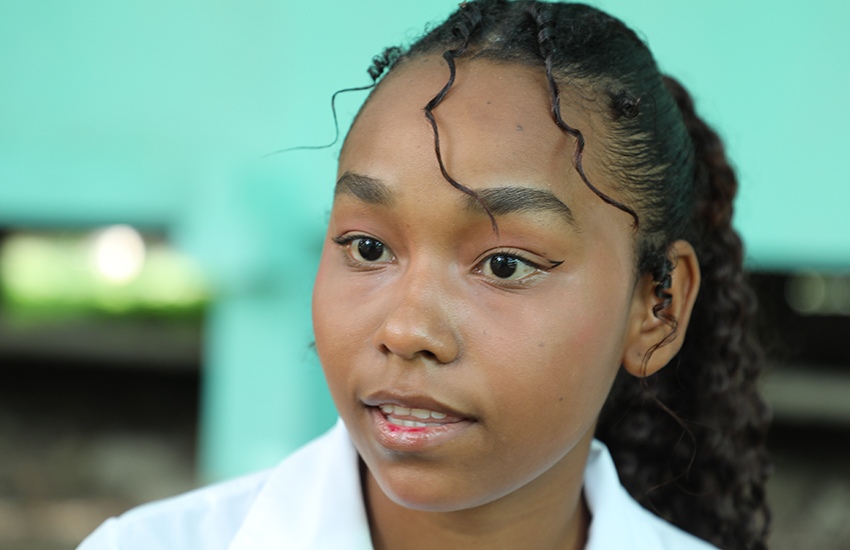 "When they told me about doing 12th grade at the university, I was astonished, because I had very clear goals, and college meant a big step forward. I'm just getting started, and I already feel that we'll come out of here much better prepared. It's not the same teaching material; we're acquiring knowledge about the human body, about anatomy.
"On a more subjective level, we're going to experience the profession firsthand. Being a doctor brings with it a commitment, physical exhaustion; it's a job without set hours. This introduction really prepares us for what's to come. And how exciting it is!
"In the classroom, we are very similar because of our empathy for our common goals. No one wants to be left behind. And that competition is very fruitful because it drives us to study, to participate, to lose our stage fright. The biggest motivation is that we will save human lives, and that's a powerful statement, but it has a profound impact.
“Some time ago, I read negative comments about the University College on social media. Very harsh opinions, saying that we were too young, that we would be mediocre professionals, and I don't believe that. Here we are preparing ourselves with an excellent faculty, and we are making a lot of sacrifices. The future will prove us right,” he says.
They walk among the group of university students at their own pace, but with redoubled enthusiasm. Some confess that they feel small because of the abrupt change, that the faculty is immense, that the laboratories are imposing, and that the smell permeates their clothes and skin. They joke, but they take their roles very seriously.
Dr. Yexsy Ávila Pérez, director of professional training at the educational institution, also shares the immense challenge of starting a university college for the first time.
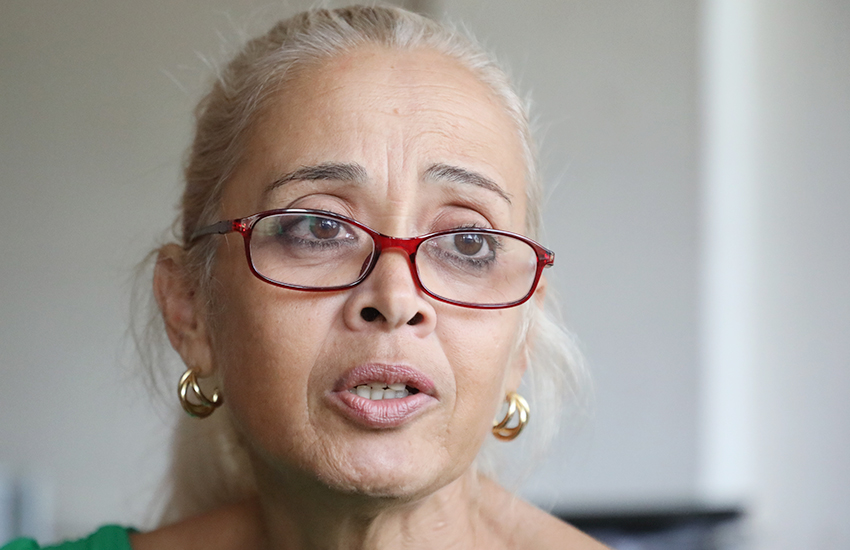
“In February, we received instructions from the Ministry to offer medicine and nursing courses through the school,” says the doctor. The aim is not only to train more health professionals, but also to increase student retention, something that has really hit us hard in recent years.
“In October of each calendar year, we begin a vocational training cycle. We go to secondary schools and interact with students because we know that this sector requires many attitudes that must be fostered at an early age; I am talking about commitment, sensitivity, and sacrifice. We also want to attract students through this new avenue.”
The Master of Science comments that, after biology and chemistry exams, a ranking was established and 40 places were awarded to students from the municipality of Las Tunas, between medicine and nursing. Experience has shown that, for the coming academic year, they can extend the possibility to the entire province and other profiles.
Currently, future doctors are taking twelfth-grade courses in the classrooms of the UCM. At the same time, they are enriched by outreach activities and activities specific to their careers, to encourage their vocation. The process is supported by a highly trained faculty, which participated in the workshops of the 3rd Educational Improvement Process, taught by the education system.
"It is a challenge for the institution because the experience is just beginning, and we have set ourselves the goal of making each of these teenagers fall in love with practical activities, taking them to different settings, with teachers who can inspire the emerging generations.
“We have been lacking vocational training, and we are adopting strategies to make this learning possible from an early age. Our school has a diverse and highly motivated group. The conditions are in place to offer all the support that is required along the way,” says Ávila Pérez.