

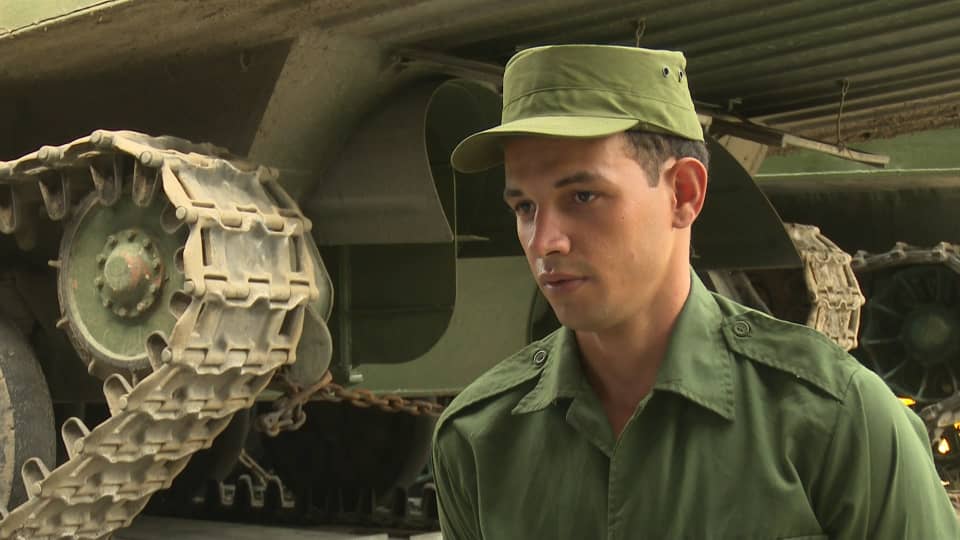
Yisandro Hernández Hernández, a soldier in the Revolutionary Armed Forces (FAR), is serving his active military service in the nation's capital. He is a farmer alongside his father in Pinar del Río; yes, that same land that just over a year ago was ravaged by a hurricane.
Las Tunas, Cuba.– “We haven't been able to recover the tobacco fields. Now we plant root vegetables, beans, and rice. It's been difficult to get back on our feet,” confesses the young man with a sorrow that transcends distance.
However, the mission he is now fulfilling has confronted him with a reality he never imagined experiencing. His destination was not another front, but the devastation in the province of Granma. “Arriving in those towns and seeing everything flooded with water…,” he recounts, and in his voice, one can feel the helplessness of someone who knows the pain of seeing a lifetime's work reduced to rubble. "It will be difficult for them to return to what they once were."
After Hurricane Melissa devastated eastern Cuba, Granma province became the epicenter of one of the most intense rescue operations in recent years. The Revolutionary Armed Forces (FAR) deployed their specialized rescue units, demonstrating once again their commitment to the Cuban people in times of crisis.
Lieutenant Colonel Yordanis Rivera Bello, head of engineering for the Las Tunas military region, recounts that the mission began with a clear and concise plan. "There was no need to elaborate to understand the magnitude of the task."
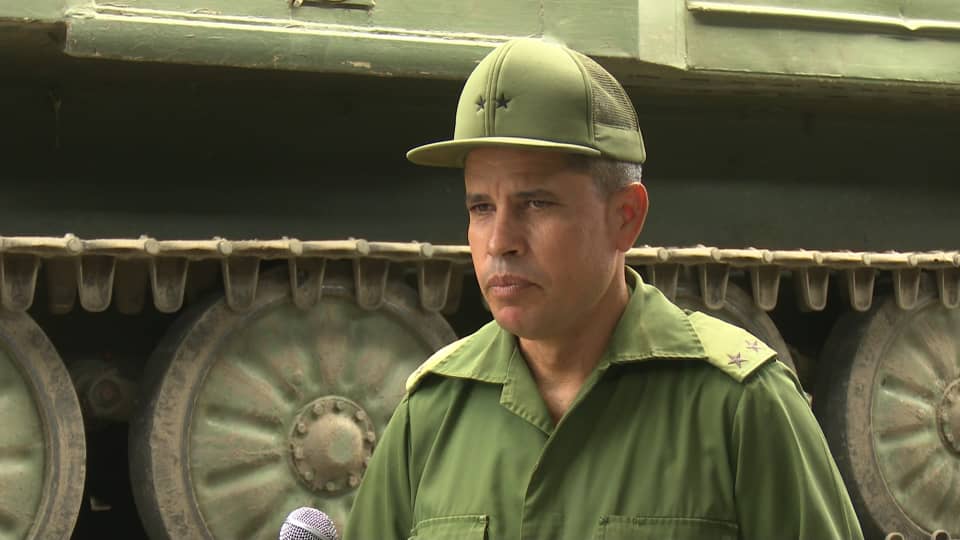
With the arrival of equipment from western Cuba to transport them to the most affected areas, such as Cauto Embarcadero and Río Cauto, the deployment was immediate.
"We boarded the armored vehicles and began to see the damage. The isolated families welcomed us as if they were being given a second chance at life," Rivera Bello recalls.
"The operation was carried out with amphibious vehicles and highly trained personnel, facing extreme conditions and a desolate landscape."
THE OVERFLOWING RIVER AND THE URGENCY TO ACT
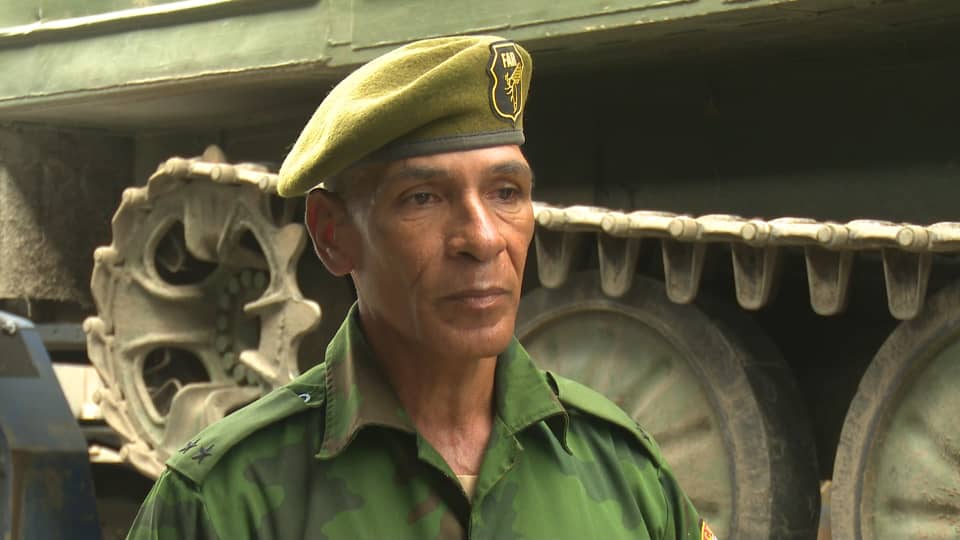 Lieutenant Colonel Iyel Alba Solano, head of the special forces of the military region here, describes the scene in Río Cauto as devastating; the overflowing river and the force of the water complicated access to the most vulnerable areas.
"The population was desperate. We saw people caring for animals on the rooftops, waiting for help."
"One of the most moving moments occurred when an elderly woman, upon hearing the sound of the amphibious vehicles, thought it was another flash flood. When she saw that it was the rescuers, she knelt in gratitude.
"People applauded us, they waved to us. It was a very beautiful experience; we could save a man who had been trapped in a tree for two days, hanging on," says Alba Solano.
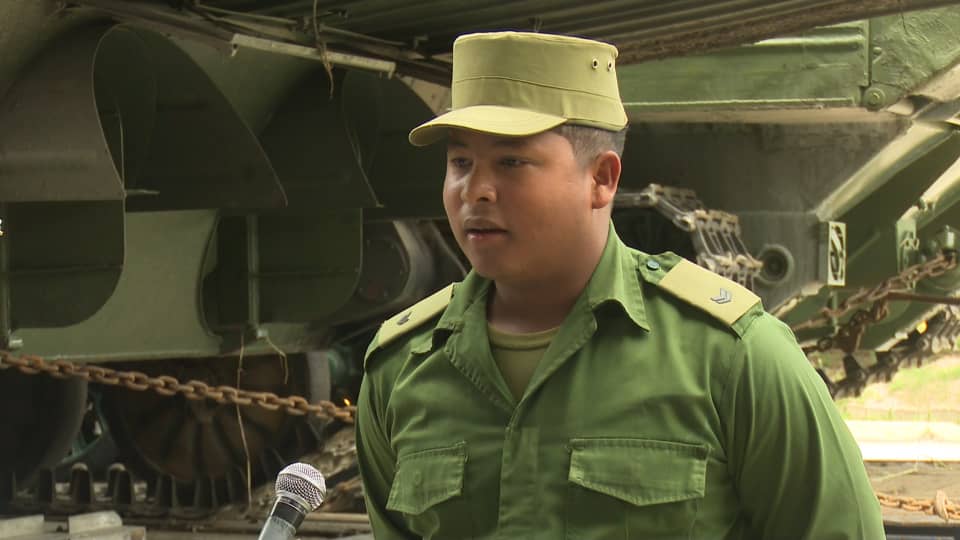 The preparation and dedication of the FAR (Revolutionary Armed Forces) professionals are evident. First Lieutenant Octavio Raciel Maceo Blanco, a mechanical engineer trained at the Antonio Maceo Cadet School, emphasizes technical preparation as key to facing these types of emergencies.
The young man is from Granma province, where his family and friends live. Arriving in those places deeply moved him, yet he remembered his training and why he was there.
“Every year, we train in watercraft for natural disasters. This time, the mission was in my province, and that gave it special significance.”
During the rescue, his team faced such strong currents that the amphibious vessel lost traction. “We had to connect propellers and run aground in a marabou thicket. With the help of a local guide, we reached the houses and evacuated the families. Despite the risk, the priority was always saving lives.”
FIRST, THE PEOPLE
The testimonies gathered during this operation reflect immense material losses. More than 300 head of cattle were lost, homes were destroyed, and entire communities were cut off. However, most importantly, no human lives were reported lost.
Marlon Cruz Menéndez, a soldier in the Revolutionary Armed Forces (FAR), lives in Pinar del Río but is currently serving his military service in Havana. The order reached his unit to evacuate people trapped by the floods.
"The first day, we faced the real challenge. We were sent to find some families trapped in their own homes. I remember the journey; the current was so strong it swept us away. It was very difficult to get the equipment out, fighting against the force of the water that seemed to want to take everything with it.
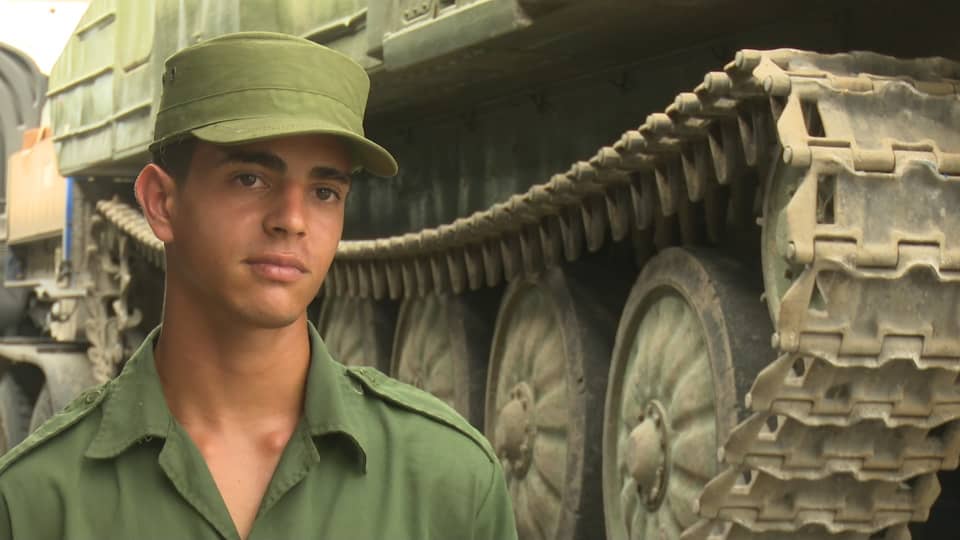
"When we finally arrived at the house, the first thing I did was get out and take out three life jackets. I approached the people, trying to convey calm amidst the chaos. 'Don't worry, talk to me,' I told them, while I helped them put them on. Once they were ready, we carefully loaded them into the amphibious vehicles and left, heading for a safe place.”
For Marlon, thinking about the mission is overwhelming. "I chose medicine; it's the path I chose to help others. And now, here, in the midst of this difficult situation, I realize that I'm already saving lives without even being a doctor yet."
"If I had to choose one image, it would be the gratitude of the people. After we saved them, seeing them waving as we left, with that emotion in their eyes. It's immense gratitude, a feeling of profound appreciation that I don't know how to explain."
The experience these men have had, some of them far from their homes and families, leaves an indelible mark on their development. In every maneuver, in every gesture of consolation, the value of selfless dedication, of duty fulfilled, is reaffirmed.
"The action was swift and effective." “The Revolutionary Armed Forces (FAR) are here to serve the people, and that is our greatest pride,” concludes Alba Solano. This rescue operation in Granma not only demonstrated the FAR's logistical and technical capabilities, but also its humanitarian vocation. Amid the pain and devastation, the uniformed personnel became a symbol of hope, reaffirming that in Cuba, solidarity is not improvised but honored.