


- At the Vladimir Ilich Lenin campus of the University of Las Tunas, the use of renewable energy has arrived to improve the lives of its faculty members.
Las Tunas, Cuba.- Miliannis Domínguez Peña, Ph.D. in Sciences, head professor in the Department of Spanish Literature, is one of the beneficiaries of a program launched by the Ministry of Higher Education that has made it possible to provide solar panels to faculty members. With a smile that reflects her satisfaction, Miliannis shares her experience with us, highlighting the transparency of a process that made all the difference.
“I’m very happy with the initiative, with the way the panels were distributed, even though there weren’t enough for all the professors —but hopefully more will arrive in the future,” says Miliannis, making clear the personal and collective impact of the initiative.
READ MORE
Solar Panels as an Incentive for Outstanding Workers in Las Tunas
For her, who teaches research methodology, Latin American, and Cuban literature, having this resource at home has been a turning point in her professional performance. “It’s very good for us professors to have this resource, because with the panels we can, for example, plug in the computer and do work at home; it helps us continue what we normally do and couldn’t do before due to power outages.”
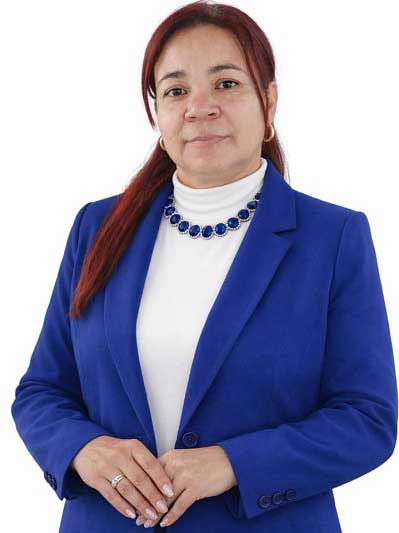 The professor explains that the electrical stability she now has, thanks to the solar panel, translates into a smoother connection with her students and with academic demands. “It also helps us stay connected with the students, because my circuit is separate from the university’s server, so when we don’t have power at home, the university does, and that helps us stay in touch, because we have a constant power supply,” she explains, highlighting how the energy solution has created a vital balance between her home and her workplace.
“The process went, in my view, very well; the coordination with the bank was smooth. Plus, when we arrived at Copextel, the allocation was already in place, and the bank representative who assisted us was very kind,” he recalls. Far from being a cumbersome process, the experience was quick and convenient."
The payment terms, in particular, showed a sensitivity for which she is deeply grateful. “The bank accommodated our payment plan; for example, in my case, my salary was enough to pay it off over five years, but I had a co-signer who earned less, so they arranged it for six years—almost seven—so I’m paying very little; it’s a small amount. The bank branch allowed us to receive the grant funds because they lent us the money, but they also gave us the option of these payment plans.”
Miliannis’s gratitude extends to everyone who made this process possible. “And of course, my thanks to the Ministry of Higher Education, which helped us; I am very grateful to them and to the university.” She also highlights the transparency with which the process was handled at the university, an element she considers crucial to the initiative’s success.
“We professors usually work at night, because during the day we’re at work teaching classes, plus our household chores. Often, almost all night long, we’re planning our classes, preparing PowerPoints, uploading teaching materials to the platform—which takes time—and reviewing articles, because while we teach, we also have other responsibilities like advising undergraduate, master’s, and doctoral theses; we do those things at night.” Now, thanks to the panel, nighttime work has a steadfast ally.
Her testimony expresses gratitude for the solidarity shown with clarity and sensitivity toward those who dedicate their lives to research and the education of new generations.