

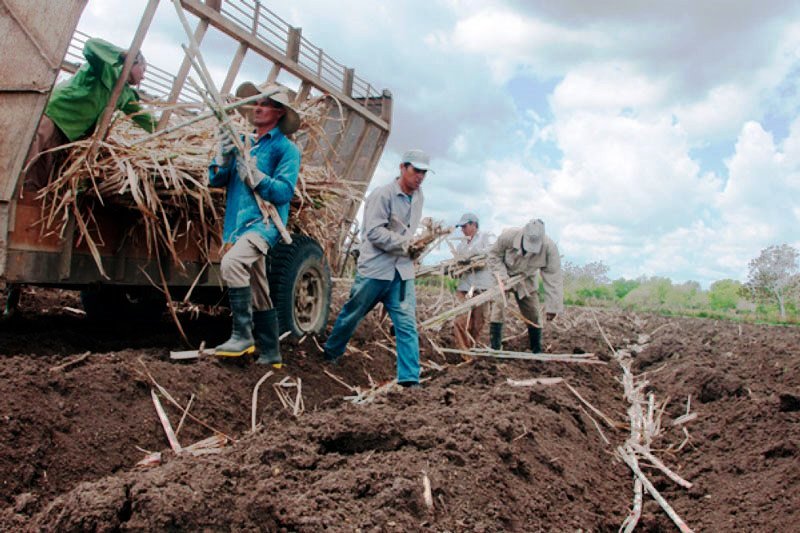
Is it still relevant to insist on the need to plant more sugarcane if the industry lacks the technical capacity to process it, and the fields clearly demonstrate this with the immense quantities of unharvested and withered cane?
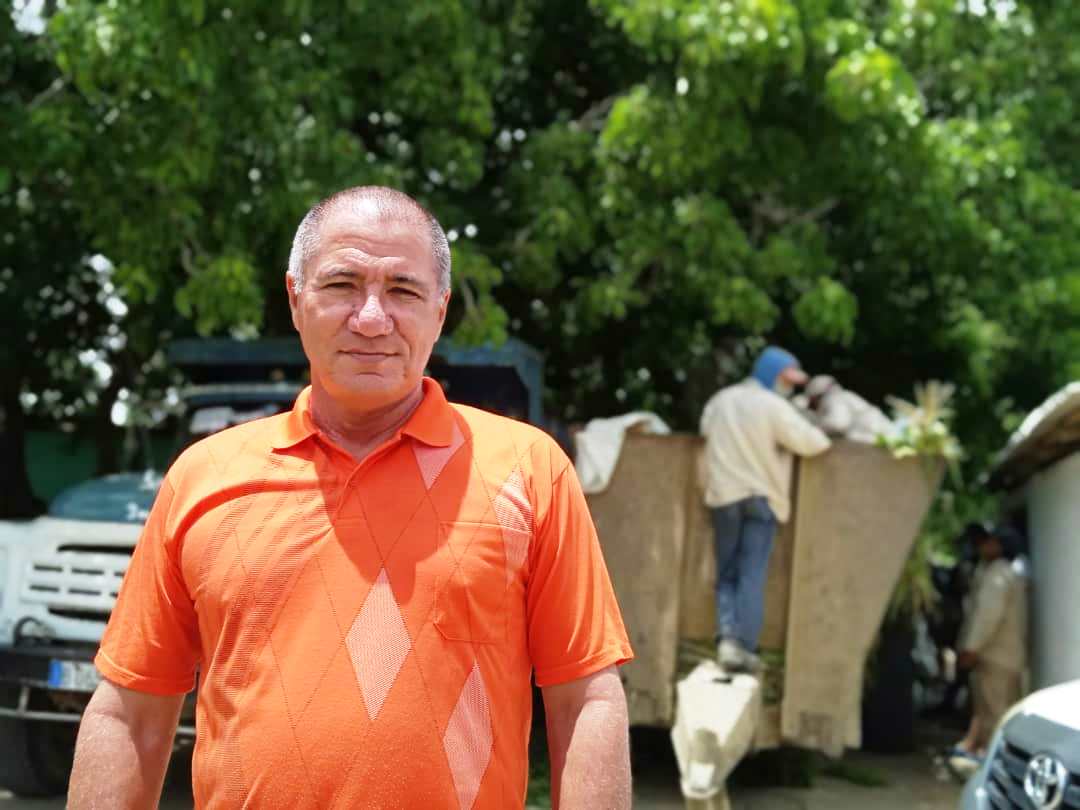
This question was enough to prompt seasoned sugarcane producer José Luis Jomarrón Cera, president of the Diego Felipe Basic Unit of Cooperative Production (UBPC, in Spanish), to offer valuable insights for revitalizing the sector, correcting distortions, and halting the decline of the sugar harvest.
At this UBPC, located in the northern municipality of Puerto Padre, they plant and cultivate the crops on low-fertility soils using dryland farming methods; however, its board of directors and workforce have traditionally demonstrated that efficiency and diversifying production are indeed possible.
- The decline in the sugar harvest: Is it due to industry or sugarcane?
“It’s a classic chicken-and-egg situation: if the mill doesn’t operate, there won’t be any sugarcane, and if there’s no sugarcane, the mill won’t operate,” he states emphatically. “We have to work on both aspects simultaneously if we want to achieve the desired results.
We, producers, know how to do it, and we’re aware that much can be accomplished."
“Due to the inefficiency of the milling industry, to which we sell our sugarcane production, there are defaults on payments for the raw material—already delivered and processed—which has disastrous consequences for the entire financial system of the supplier units, and affects the payment of advances and the purchase of inputs necessary for production. Furthermore, costs are disrupted, because by not paying the loans granted by the banks on time, interest increases and considerable sums of money are spent.”
“This reality frustrates our expectations, because based on current production levels, we—the workers and I—had projected earning up to 17,000 pesos per month, including basic advance and performance-based bonuses, and that wasn't possible.”
- Are there any unharvested sugarcane fields?
 “Last harvest season, we had 14,000 tons of sugarcane left unharvested, representing approximately 28 million pesos owed. Of that, eight million would cover expenses, and 20 million would be distributed, which would amount to 200,000 pesos in profit sharing for each worker."
“Contrary to what most people might think, sugarcane production is a technological process, and one of the fundamental aspects is the balance of stubble. The percentage of unharvested stubble cannot exceed 20 percent, and when it does, it greatly affects agricultural and industrial yields, resulting in considerable economic losses.”
“Today, some mills are operating with 40, 50, 60, and even 70 percent of their sugarcane left over, and these canes are being milled at different times due to delays in the harvest. They should have been harvested in December and January; still, sometimes, it's done in March, April, and May, increasing the percentage of foreign matter, one of the critical factors that depresses yields. Some stalks aren't harvested and are left over, amplifying losses for the industry and production processes.”
-What are the missing links in the chain?
“The recovery of the sugarcane industry hinges on motivating workers, fostering a sense of ownership of production within work collectives, and ensuring, as far as possible, the availability of essential inputs such as herbicides and fertilizers, and reactivating agricultural mechanization…"
“I believe that, to address the current situation, the major priority is to support the workers, because right now they are the only asset we have available and are capable of generating many of the resources we lack. We have lost ten times more than we would have spent on such initiatives, but we haven't supported this workforce; we've remained stuck in rhetoric, good intentions, and stereotypical phrases."
“It is also necessary to modify the productive structure of the UBPCs (Basic Units of Cooperative Production), which emerged more than 20 years ago. Today, this organizational system hinders the efficiency of new technologies and prevents us from achieving the expected results.”
- So, do you believe that sugarcane production isn't being given the priority in practice that the strategic program for saving the sector establishes in theory?
"Currently, sugarcane production is being encouraged in documents, directives, and resolutions. The country has made a tremendous effort, and the current price of raw materials under normal conditions would be very advantageous and stimulating for producers, but these measures came a little late because the necessary resources to give the activity the boost it needs are lacking."
“It's true that at the moment we don't have the essential supplies to maintain the sector, I would even say to save it. But it cannot be ignored that this sector, if well managed, is capable of self-financing and generating substantial dividends for the country's economy. There are examples in other nations that demonstrate this.”
-In your work, do you have institutional support?
“Since the 93 measures were adopted to save the sector, things have improved significantly. In the production process, we are supported by all the relevant institutions, except for insurance, which is too expensive, and even then, it doesn't cover even 10 percent of the expenses that harm production. There are persistent droughts, floods with major production and economic impacts, and the National Insurance Company (ESEN in Spanish) doesn't cover anything; it always looks for excuses and, in most cases, doesn't respond. This is the general opinion among farmers.”
- What is your opinion on the autonomy of the UBPCs?
“The issue of autonomy has been addressed, but without the necessary oversight and enforcement that autonomy is meant to do things right, without the shoddy work that sometimes happens.” Under the concept of UBPC autonomy, many have been mismanaged, others have gone bankrupt, and quite a few, although profitable, are not reaching their productive potential. The State must grant autonomy, but also exercise greater control. It has to play a different role.”
-How to weather the storm?
“We must improve the support we provide to our men and women, awaken their motivation, meet their growing needs, and pay them according to their work. This isn't new, but we must pay them for incentives, for productivity, quality, and discipline. There is legal backing to implement payment systems that take these attributes into account, but there is negligence in putting them into practice.”
- Amid these challenges, how do you achieve efficiency at the ‘Diego Felipe’ unit?
“In my unit, everyone receives an incentive based on their weekly performance evaluation. There is a work organization that I find perfect for a socialist model: the work collectives. Their creation increases the sense of belonging because the workers own everything; it's a form of collective ownership.”
- However, its implementation hasn't been given the importance it deserves. We can't continue to rely on privatization.
“We've implemented a sound strategy with strain balancing, and the application of science and technology has allowed us to achieve a higher seedling population. The yield is 42 tons of sugarcane per hectare (h), on very poor quality soil and under rainfed conditions."
“In the spring planting season, the plan was to plant 82 hectares, and we planted them without losses. Now we have the land prepared to begin the winter planting season and plant another 73.4 hectares.”