

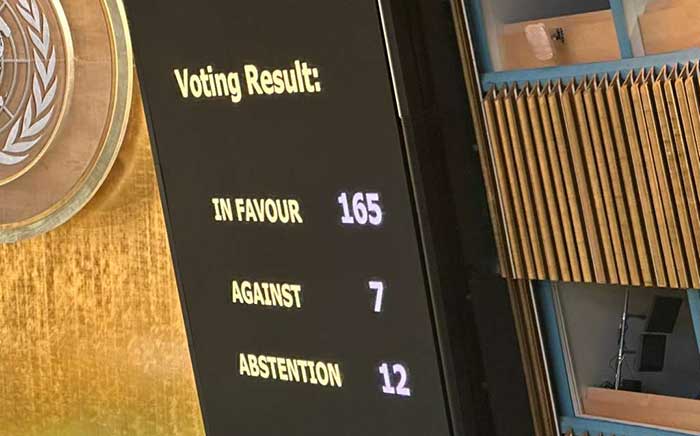
Early this week, the international community demonstrated its support for the Cuban people by calling for an end to the United States' economic, commercial, and financial blockade against the island. The debate on the draft resolution presented at the United Nations General Assembly was, without a doubt, a sample of solidarity and recognition of the injustice perpetrated by the northern neighbor against "the Largest of the Antilles."
That scenario led this journalist to reflect, amidst the meteorological chaos currently gripping the country, on how much the hostile policy harms us, and on the challenge that it represents for the country's leaders to provide food for an entire population.
In the fields of Las Tunas province, for example, the land shows more cracks than crops. Now, we are left with ruins in the process of being rebuilt after the passage of a devastating hurricane.
In the state-run markets, before Melissa, we could find plantains, yucca, and sweet potatoes repeatedly. Limited variety, basic products at exorbitant prices… the notebook for the regulated basic basket, a relic of another era, is proving increasingly inadequate.
WE RECOMMEND
Despite Pressure, the World Stands with Cuba against US Blockade
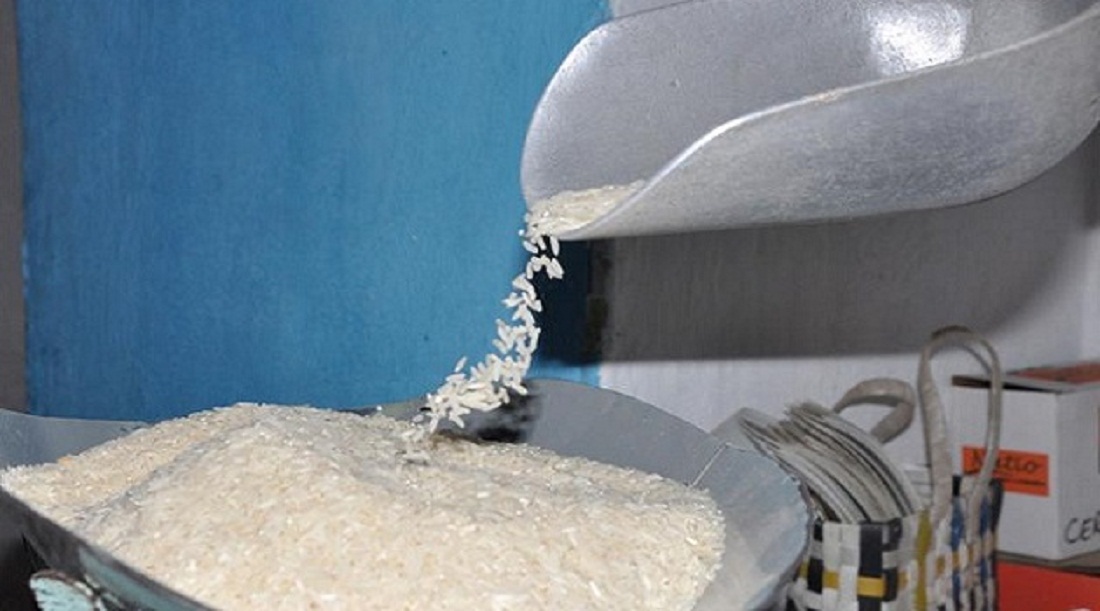
Then, rescuing the agricultural sector becomes a task for the authorities, and there is a will to do so. Their efforts, for some, are insufficient; for just as many, admirable. It is a constant battle that is brought to the table daily: there are shortages of rice—a staple food, almost indispensable on every Cuban's plate—meat, grains, dairy products…
The commitment of those working directly in the fields, those milking the cows or herding the small livestock, is evident. The rest of us depend on them achieving good harvests and delivering the contracted quantities, not only for sale but also for social consumption. In hospitals, there are pregnant women on strict diets, and in childcare centers, infants who need these products to grow.
This difficult situation extends beyond the fields, the dairy farms, and the food processing plants. This is not an isolated phenomenon, nor is it simply the result of internal inefficiencies. It is the critical point of a perfect storm, where decades of structural limitations converge decisively with the comprehensive intensification of the economic, commercial, and financial blockade imposed by the United States.
The sanctions, intensified to suffocating levels in recent years, have practically closed any avenue for food financing, increased the cost and length of supply chains, and deterred international suppliers due to the risk of being penalized. The authorities and the people are a clear example of Cuban resilience, but about the effectiveness of a maximum pressure policy.
The challenge is titanic. Feeding a population under these conditions becomes a permanent crisis management effort. And overcoming it depends not only on the internal will of the Cuban people, but also on the complete elimination of the main external obstacle: the blockade.