


Even dogs follow Chuchi! Although it may sound like a cliché or populism, it is an argument for the leadership skills of Jesús Martínez Batista, when one of the dogs from the Fishing Brigade camp, based these months at the Gramal reservoir in Manatí, interrupted an interview to show affection to someone who perfectly combines high standards with good work.
The name Jesús is used on official documents, but everyone knows him as Chuchi, the man who knows more than a few secrets about catching fish in his more than two decades of work. Likewise, his hand guarantees help for everyone, and his affable manner alleviates the harshness of so many days away from family.
The different fishing techniques elicit more dialogue from him than any microphone; however, his passion weaves words together, while his gaze reveals the sincerity of each answer to questions about the daily life of a profession that is far from the media spotlight but is of notable importance to the local economy.
“We get up at dawn, the schedule depends on how complex the task to be performed during the day is, because we also depend on weather conditions, everything has its moment, although it does require constant work,” said Martínez Batista in a brief outline of his action plan, which ranges from the usual to the specific.
For the rector of the northern freshwater area in Las Tunas, “the main thing is that the person in charge of the group is not seen as a boss, but as a leader, a co-worker, and that he can turn the collective into a family, despite the challenges of country life; and that is achieved when you put your heart into it, when you love what you do.”
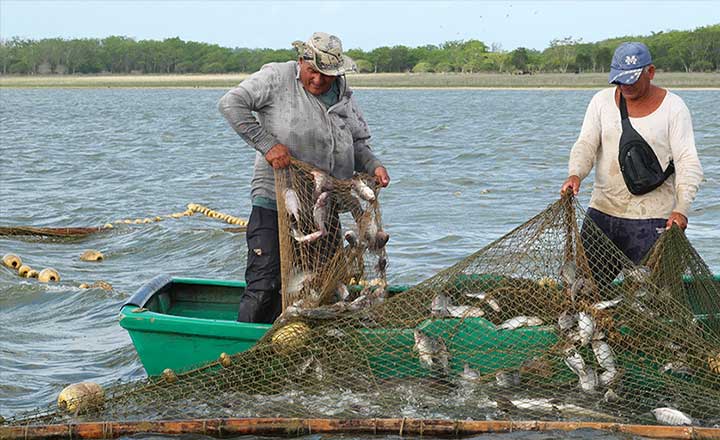
His many years of experience on a boat have taught him that results are forged from the shore, in the small details, by beating nature at its own game to turn effort into good results, as the brigades under his charge do, which aim to meet the numbers stipulated for a calendar in the first nine months.
In addition to battling the “dams,” Chuchi is taking on new challenges on solid ground by raising farm animals to expand and improve his family's diet. That's why pigs, guanacos, sheep, and dogs also make the journey when they move from one place to another, providing both security and affection.
However, for someone who has spent so many hours under the sun, there is always a pause in any conversation for those anecdotes that teach lessons and establish a permanent place in the memory, in his own words.
“We have had four or five boats sink at once due to bad weather. We have never found some of them, which is why we always emphasize protection and have never had any serious regrets,” he admits with a mixture of nostalgia and relief.
On the other hand, the limitations caused by the country's financial crisis haunt them even in the most remote places, as they have gone days without fishing due to a lack of ice or fuel for transporting and preserving their catch, while the people of Las Tunas demand stability beyond the efforts of a few.
Pleasant memories, those capable of shaping the destiny of many, always come up in the story, accompanied by a proud smile, similar to that of Jesús when he recounts that "some time ago, we caught 80-odd tons in the Meriño reservoir. When you catch such a large school of fish and then feel what you have caught, it is very beautiful, something unforgettable."
A sea of responsibilities keeps Chuchi on the move, combining precise guidance with a friendly shoulder, willing to share concerns and, to a greater extent, solutions, like the simple gesture of casting nets into the water.