


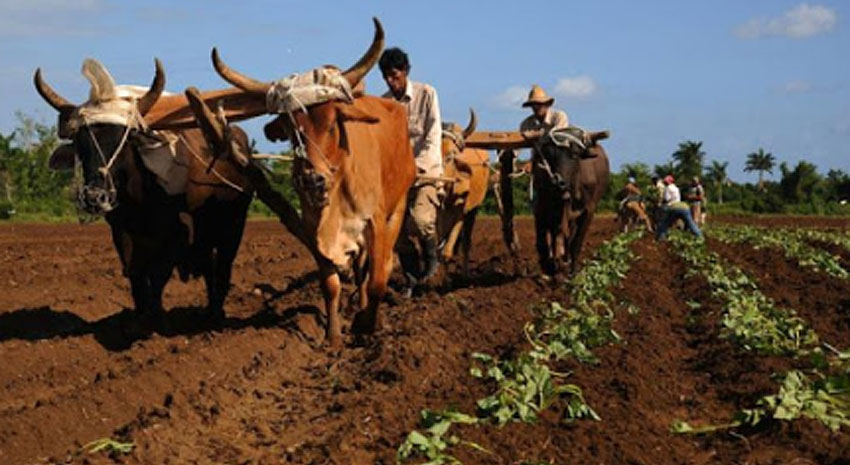
With the start of September, the cold season planting campaign also began in the province of Las Tunas, a decisive stage for food production in 2026, especially since an increase of 2,935 hectares (ha) is forecast compared to the same period last year.
Las Tunas, Cuba.- Units belonging to the Ministry of Agriculture (Minag in Spanish) intend to plant nearly 23,627 ha, and production entities associated with the Azcuba sugar group, around 3,190 ha, for a total of 26,817.7 ha.
For six months—until February 28 of next year—the cultivation of root crops will be prioritized in the Las Tunas territory, which is crucial for fulfilling the municipal self-sufficiency program and strengthening local food systems.
Grain crops will also prevail in the different production scenarios, with an emphasis on popular and specialized rice, beans, and corn, three items in high demand among the population that will help replace costly imports.
As has been the case in recent years, there is a significant lack of important material resources necessary for the plantations to develop well, with acceptable yields for the soil and climate conditions of the eight municipalities.
The head of the Miscellaneous Crops Department at the provincial delegation of the Ministry of Agriculture, Luis Oro Torres, specified that local farmers will take advantage of the benefits of organic fertilizers and biological means for pest and disease control, in addition to the use of animal traction to make up for the lack of fuel required for land preparation and crop care.
Added to these difficulties is the low availability of water in the province's reservoirs because rainfall has been scarce during the wet season. Nevertheless, there is a willingness among producers to achieve good results, which will be reflected in better contracting and, more importantly, a greater presence of agricultural products in the markets.