


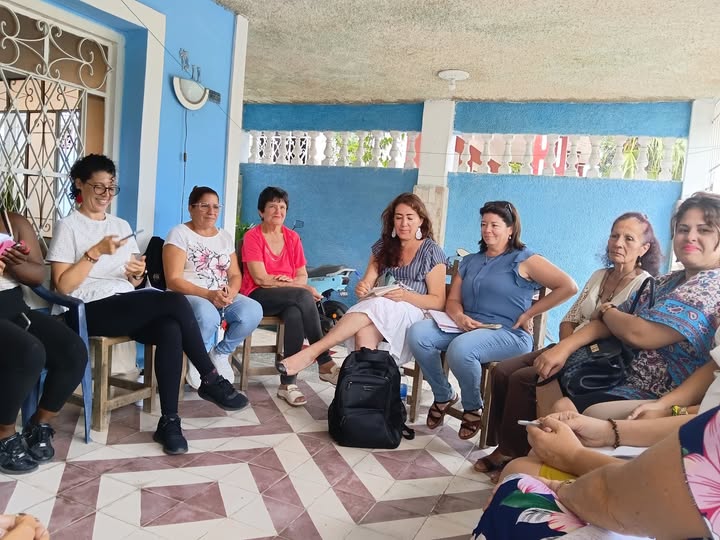
More than a year after its launch in Las Tunas, the project “No More: Prevention and Response to Violence against Women in Cuba” has seen its main national coordinators return to the province to assess the progress made in conjunction with the Federation of Cuban Women (FMC) in the territory and with important voices committed to gender issues.
Las Tunas, Cuba.- Lirians Gordillo, deputy director of the Women's Publishing House and a member of the project's coordination team, told 26 that their visit to Las Tunas aims not only to explore the extent of progress made toward the planned objectives but also how these processes have contributed to changing social perceptions.
“After a year and a half of strengthening capacities for addressing and preventing gender-based violence, working with diverse women's groups, and improving the FMC's counseling services in the six municipalities where Nomás has a presence, it's time to review all the processes that led to these results.”
“This assessment comes after meetings and interviews with members of the teams in Las Tunas, Plaza de la Revolución, Marianao, and others. These meetings have allowed us to learn what has worked for us, both in terms of methodology and work processes, as well as practical and contextual issues, because we know the country is currently facing a very complex situation.”
The journalist and researcher pointed out that the coordinating team's presence in the province also aims to guide certain processes related to the Media Observatory, which is based in Las Tunas and receives ongoing support from the Women's Publishing House.
“Starting in September, the Observatory will resume monitoring the informative work of all media outlets in the six municipalities included in the project during the 16 days of activism for the International Day for the Elimination of Violence against Women and Girls.”
“We are also investigating the progress of the women's groups and their social mobilization. We have a very interesting project with the women of the San José neighborhood, who developed their agenda as a communicative and practical tool and have a comprehensive action plan to support the prevention of and response to violence in their community.”
“We have been in dialogue with everyone involved in the project, including government authorities, who also play a very important role in each of the territories. We are currently in the process of providing training and capacity building to the police, the legal, and local sectors —an action we know is very important.”
In this regard, Lirians emphasized that training and capacity building must be ongoing, because the same people are not always present in all areas, and that it is crucial to achieve an understanding that gender-based violence is a social problem that requires sensitivity and knowledge.
“Right now, one of our strengths is that we have updated and advanced legal norms and programs, but we know that not everyone is familiar with them, including professionals whose social and public responsibility is to respond to violence.”
The assessment also included insightful comments from Yoanka Valdés, project coordinator from the Cospe office in Cuba. The day was dedicated to dialogue and collective development, seeking to deepen its scope and continue the commitment to training and capacity building for local stakeholders.