


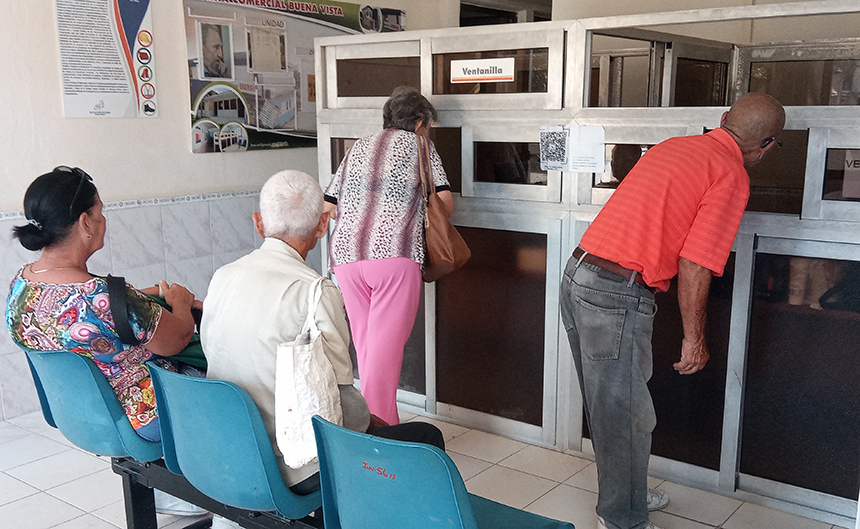
Since August, the Buena Vista sales office, part of the Las Tunas Electric Company, has become the first in the municipality to implement the Point-of-Sale (POS) terminal as a payment method. Nearly three months after its installation, the center’s manager, Helen Hernández Pavón, describes the experience as “beneficial,” though she acknowledges that more outreach is still needed.
Las Tunas, Cuba.- “We were the first office to conduct the trial in the municipality,” explains Hernández Pavón. The implementation required prior training at Fincimex, where the manager received the technical training needed to operate the device.
The main value of this technology lies in inclusion. “It’s quite convenient and beneficial to have it in a commercial office,” she says. The direct impact has been seen among older adults who do not have a cell phone or family members who can assist them with electronic payments.
“They can come here, to the office, and make the payment,” notes Hernández Pavón. This alternative has served as a bridge for those who, after collecting their pension or salary at Cadeca, used to come to our commercial office with cash. “We’ve been letting them know that the POS terminal is available for their benefit.”
Despite these efforts, the administrator believes the promotion has not been sufficient. “I don’t think we’ve achieved the level of outreach we’d hoped for, because there are still many more people who aren’t aware that this service is available here at our office,” she laments.
Nevertheless, the numbers reflect a positive response. Between August and September, averages of more than 1,000 accounts were paid through the POS terminal. Part of this success is due to the outreach efforts of the company’s own customers and the work of the office staff, who have reached out to Cadeca to inform clients about this payment method.
Although the POS terminal does not offer the discount provided by Transfermóvil or EnZona, Hernández Pavón highlights its practicality in the current context, marked by a shortage of cash in circulation and fuel shortages.
“This allows us to collect payments in digital currency rather than cash, which is what we want,” she emphasizes. The administrator explains that the office deposits between 3,000 and 4,000 pesos daily, a figure that could be higher were it not for the fact that more than 80% of payments are already made electronically.