

In 1990, Alfredo Jordán Morales (now deceased) became the first secretary of the Provincial Committee of the Communist Party of Cuba (PCC in Spanish) in Las Tunas —a leader remembered, among other things, for his dedication to researching and disseminating local history.
Las Tunas, Cuba.- It turns out that, at that time, he went one day to the Vicente García Memorial to speak with its staff, based on the premise that, yes, they were conducting good research, but nothing was enough if it remained confined to that space.
His proposal was clear. “History has to reach the community, allowing people to enjoy it and, at the same time, learn from it.”
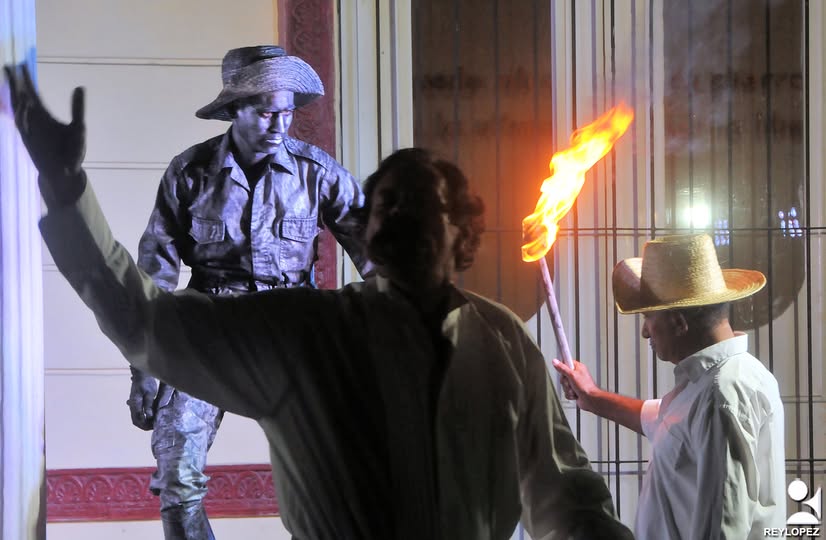
Everyone listened to him attentively, including Professor Margarita García, then director of the institution, and Rafael Aparicio Cuello, the specialist who had accompanied her in so many dreams. They told the leader that, if they were provided with the necessary resources, they could reenact the city’s fire on the very same date and at the very same location where it had occurred.
This was no small undertaking, for on that September 26, 1876, when the torch set fire to Vicente García’s mansion, Spanish nobility suffered a devastating blow—following days of a colossal siege that taught the world a lesson in sacrifice rarely seen in war and clearly demonstrated the military and strategic genius of the Major General from Las Tunas.
Resources were then made available to the experts, and Professor Margarita now recounts that the project unfolded with the charm befitting great historical events.
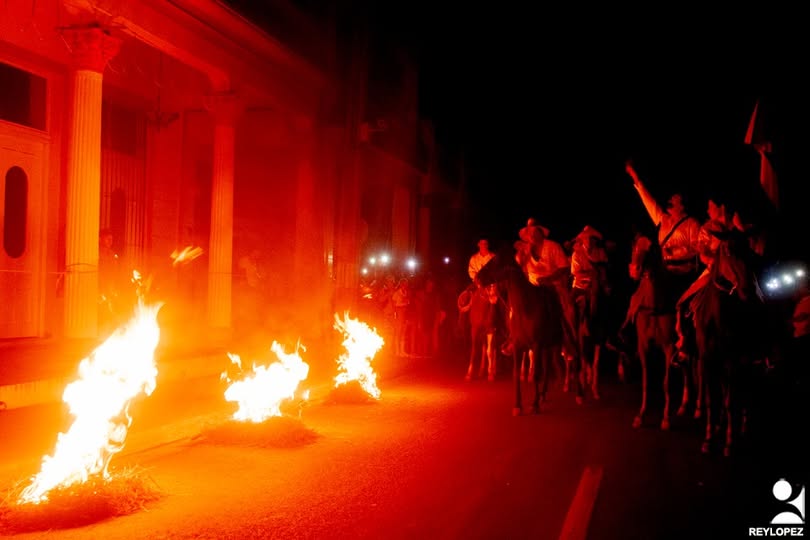
“They gave us full authority to work on the project and make it public. We were free to choose the texts, the dramatizations, and how to handle the pyrotechnics. Uniforms were provided for the mambises, along with 60 beautiful horses and riders who practiced for several days. Many people collaborated, including cultural institutions and individuals from other sectors—even from the entertainment industry.
“We designed a program of activities so it wouldn’t be just that one moment; we did it with young people in mind, focusing on their commitment to patriotic ideals.
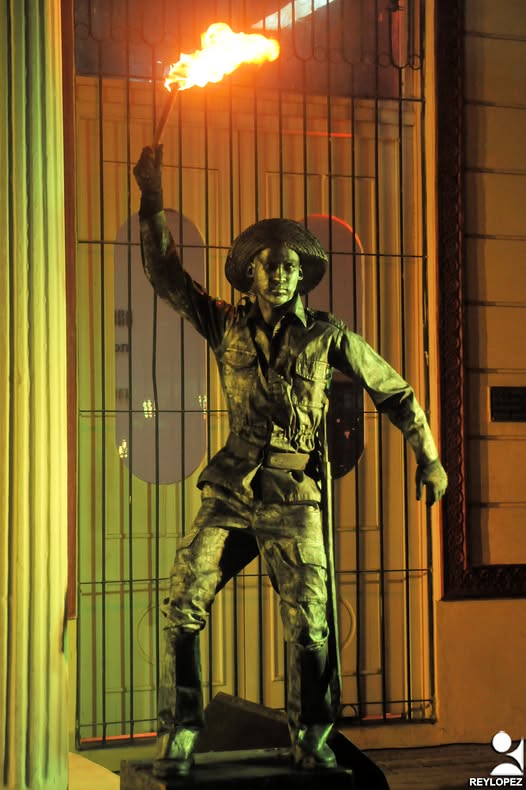 “We cast the actors, selected a flag-bearer, and recorded Vicente García’s words to Colonel Reyes Silva so the event would end on a powerful note: ‘Tunas, with pain in my soul I set you ablaze, but I’d rather see you burned than enslaved.’”
Margarita says it turned into a spectacular show unlike anything people had ever seen. The horsemen gathered at La Feria and held a dress rehearsal the night before. There were firefighters, healthcare workers, and electricians, and she also tells us they had some trouble with the pyrotechnics, “because we placed the channels on the floor, and fortunately, sometime later, someone designed the memorial with the channels on the ceiling; and now, everything flows smoothly.”
The vividness of that first moment still lingers in his memory. Antonio Pernas Pérez, then president of the Municipal Assembly of People’s Power in Las Tunas, was the first speaker at those events.
And the people were captivated by an event—seemingly simple—that encapsulated so much of the sacrifice of these lands and resonated with the people, with the community, during that tumultuous year when Cuba was facing one of its most severe economic crises: the so-called Special Period.
Now, as has become tradition, we will once again have “the fire.” It has been no less than 150 years since that momentous day when people burned their homes and took to the Las Tunas fields in the name of freedom after days of fierce and courageous struggle.
It was the time when a woman declared that she would rather die, alongside her children, than hand over the man she loved and who fought for the good of all. And she did not give in, even though two of her children were found dead within the walls where she had been confined; thus, amid the most excruciating pain, she played a leading role in one of the noblest and most self-sacrificing chapters of the Great War in Cuba.
According to seasoned researchers, this event—which took place a century and a half ago—has been hailed as “a masterpiece of calculation, cunning, and intrepidity prodigiously combined”; and General Máximo Gómez himself, a man of few compliments, described the event as “a great achievement due to its importance and the glory it brought to the Cuban armed forces.”
The truth is that, thanks to the fire commemorated every September, history comes alive in the streets, voices rise in the night, and life, in some way, celebrates a city that—scarred by the flames of its burnings—is reborn, clinging to the dreams of a better path.