

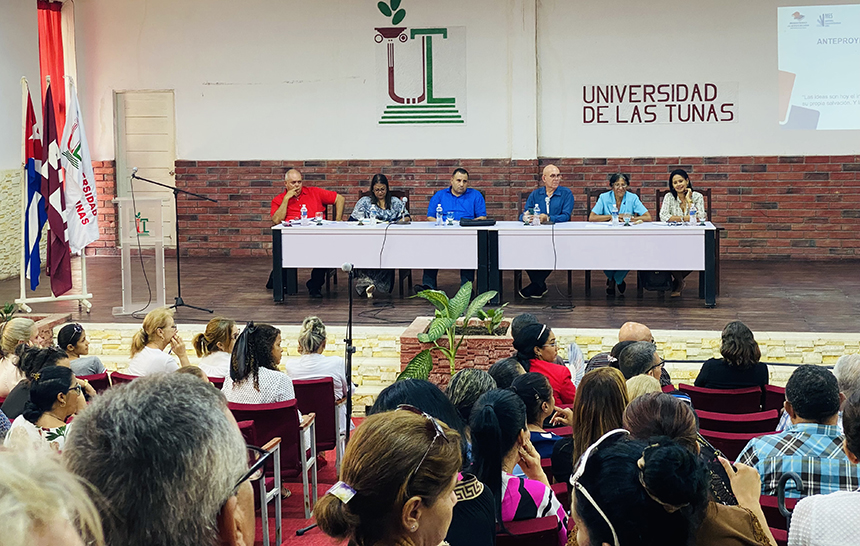
The University of Las Tunas hosted an evaluation session for the draft Education Law, a process aimed at providing the country with a comprehensive regulatory framework for its educational system. The legislative proposal comprises 10 titles, 28 chapters, 34 sections, and 243 articles, covering both general education and higher education.
Las Tunas, Cuba.- The National Education System is composed of nine subsystems designed to meet educational objectives and address specific educational needs; these subsystems are interconnected, with relationships of precedence, succession, and complementarity among them.
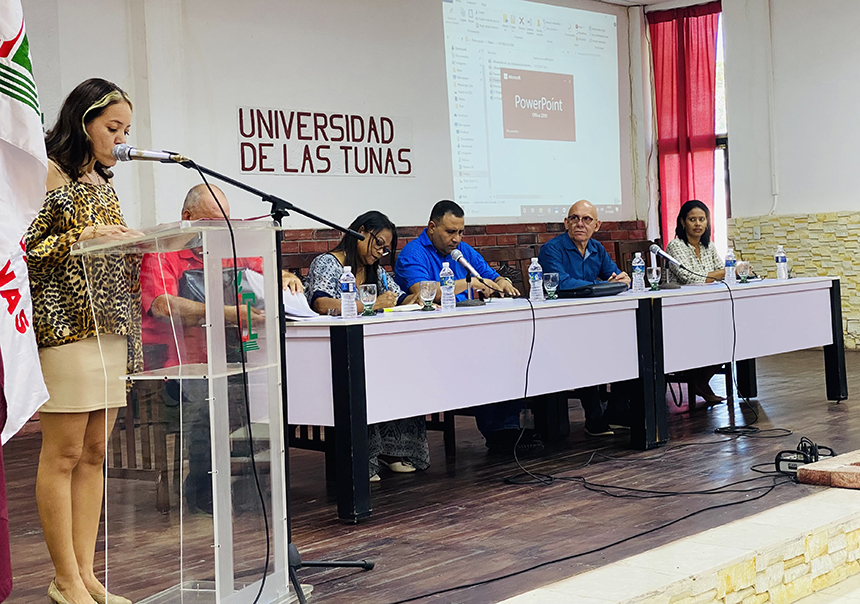 Dr. Reinaldo Velázquez Zaldívar, Deputy Minister of Higher Education, commented on the legislation's scope and significance. He explained that this draft law represents one of the government's fundamental goals in recent years, since education is one of the Revolution's primary achievements.
The Deputy Minister acknowledged that, previously, the regulatory landscape was highly fragmented. The existing education law dates back to 1959, and educational development has since been governed by a series of resolutions and instructions issued over time.
“The time has come to have a robust, integrative law; one that, above all, makes it clear that Cuba possesses a national education system comprising everyone involved in the task of educating new generations of Cubans,” he stated.
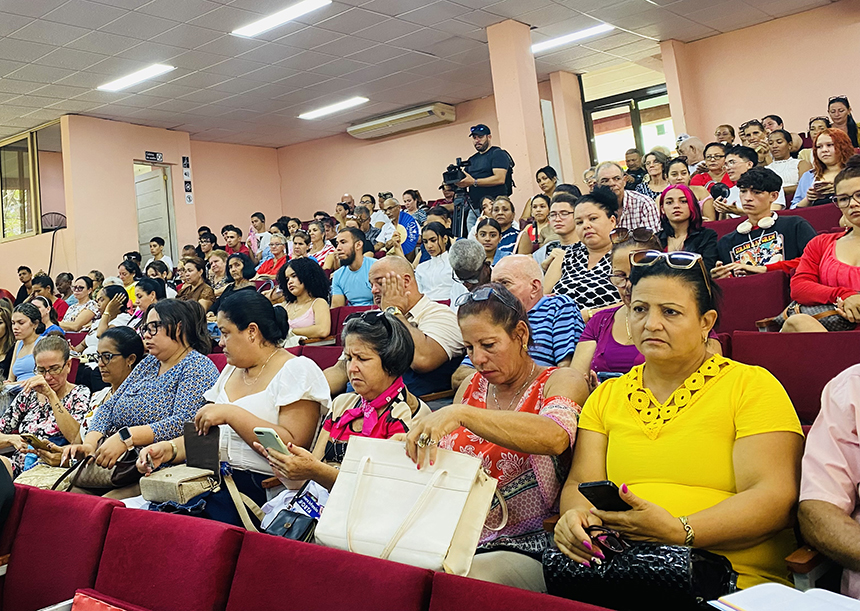 Velázquez Zaldívar explained that, beginning in 2019, a working group was established —comprising all the country’s educational institutions and bodies, and led by the Ministry of Education and the Ministry of Higher Education— to draft the legislation. “Work has been ongoing to shape this law, which has recently moved through various stages of development. Now, the time has come to carry out a broad-based public consultation,” he noted.
In this regard, he specified that two teams, composed of representatives from both ministries, have been formed; they are traveling throughout the country to gather input from the provinces, engaging with educational institutions, students, teachers, and experts.
The goal, he emphasized, is for these contributions to enrich the proposal so that it may be presented to the National Assembly for approval in December. “It is, in fact, a quite concise and comprehensive piece of legislation; one that will be vital for guiding educational efforts nationwide, especially with an eye toward the future, while drawing upon the experiences we have gained in recent years,” the deputy minister concluded.