

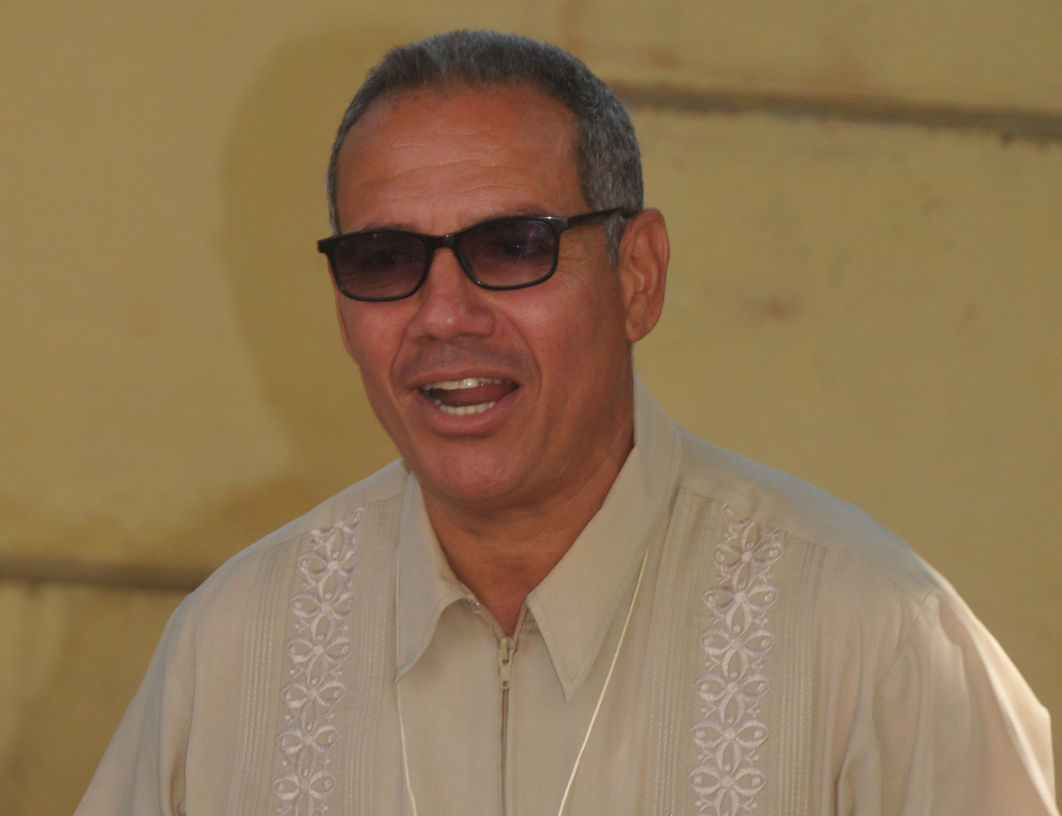
Maike Machado Vázquez was born south of Las Tunas. The town of Elia was where she took her first steps, and later, Velasco, in Holguín, would help shape her childhood dreams. These two places —which he refers to as “his two homelands”— would form the foundation of her culture.
“My mother, a teacher by vocation, taught me to read when I was around three or four years old. My paternal grandfather, Miguel Ángel Machado, for his part, was an avid reader of books, newspapers, and magazines… He had a special passion for literature and cinema, as well as the connection between the two art forms. He was always talking about related names and anecdotes; it was a blessing to have him,” says the man who, with the confidence and responsibility that come with age, looks back on the path that began there, inspired by his family.
One of the places that would undoubtedly shape his development was the Casa de la Cultura (House of Culture) in Velasco. “There was a very strong artistic and literary movement under the leadership of Félix Varona Sicilia; it’s incredible how a single person can influence the spiritual transformation and aesthetic tastes of an entire population.
“There were theater groups and other artistic expressions there. I remember we put on a version of Little Red Riding Hood, where I played the wolf. I also joined a literary workshop and had my first introduction to oral storytelling, but I wasn’t yet aware that this would be one of the paths my life would take,” he recalls.
It wasn’t until 2004, while he was serving as head of the Department of Cultural Programs at the Provincial Directorate of Culture, that he participated in a storytelling workshop led by Manolo Martínez and Mirtha Portillo Barnet.
“It was only three days, but it was enough to realize that I had the potential to dedicate myself to it. For the final exercise, I chose the story Tragedia by Vicente Huidobro, one of the works I treasure in my repertoire. That same year, the Palabra Viva Festival took place, organized by Verónica Hinojosa and featuring storytellers from all the Cuban provinces. Some of them even became role models for me: Elvia Pérez, Mayra Navarro, and others.”
Beyond the folk tale, which enriches the oral tradition, Maike is drawn to delving into literature —into those stories “lost” among the books or that we don’t always know about… “The stories I take on aren’t usually short. I draw on the potential and knowledge I’ve acquired in the art of storytelling. Among my favorite authors is Onelio Jorge Cardoso. His work Caballo is an example of that."
“I’m also interested in the work of Cuban writers such as Omar Felipe Mauri and our fellow countryman Argel Fernández Granado. I’m equally fond of Russian literature. I greatly enjoy Kafka’s creative legacy because of its philosophical depth. Although I also adapt short stories by Augusto Monterroso.” But Maike isn’t just an artist; his work as a director of institutions is another aspect that sets him apart…
THE ART OF LEADERSHIP
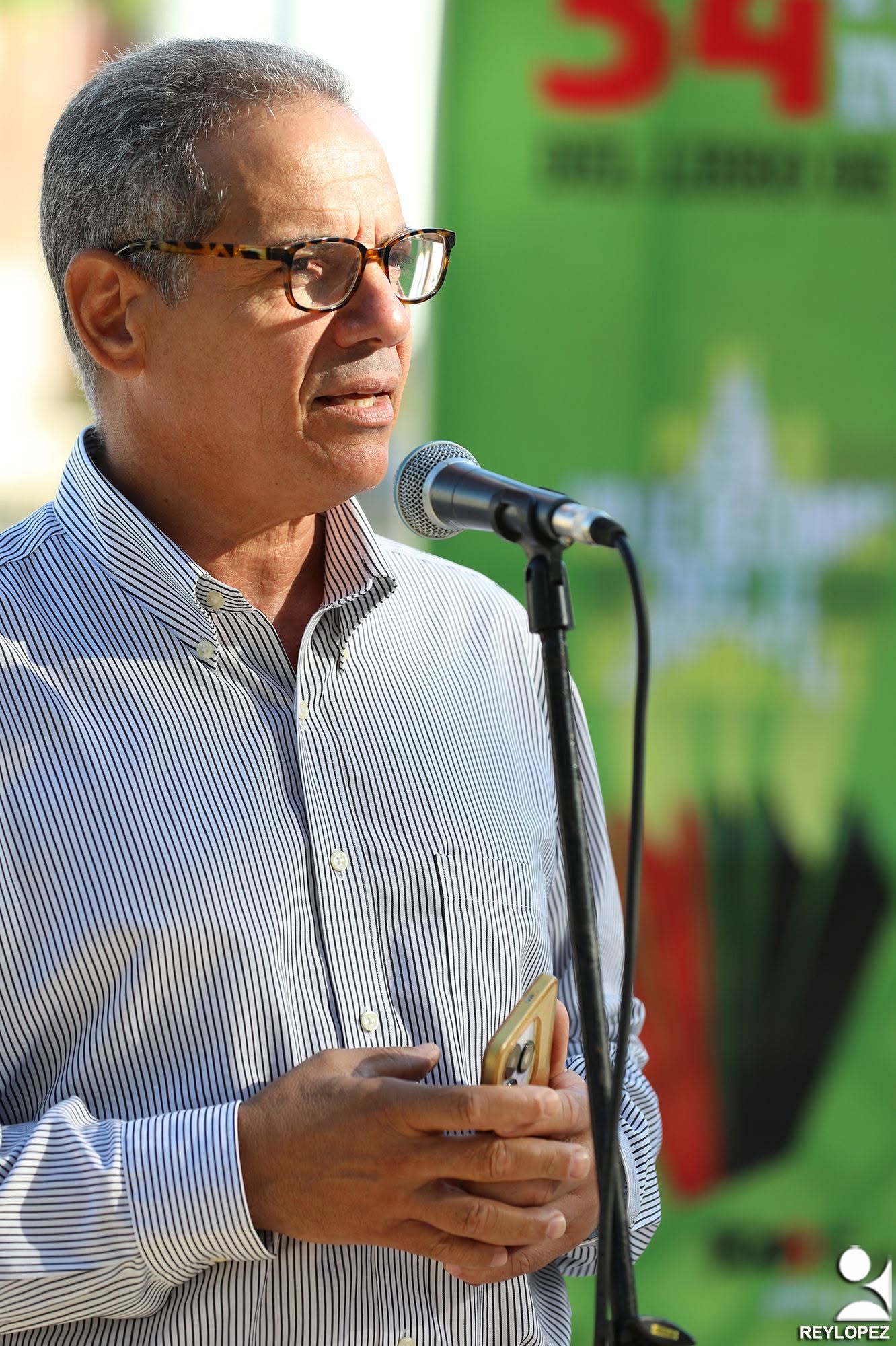 “I’d have to start with the Provincial Academy of Plastic Arts, the institution that left its mark on culture in Las Tunas at the time. We owe a debt of gratitude to its founders; many talents emerged from there, and we organized various activities… That period had a profound impact on me,” he confesses.
He then served for three years as deputy technical-artistic director of the Provincial Directorate of Culture, “an extremely important position because it guides the cultural policy of our territory —including all the municipalities— and is responsible for various processes. I had to understand the roles of a promoter, an instructor, a professional, an amateur, and an executive… It was an extraordinary experience; I gained professional maturity, mastered different art forms, and drew on the knowledge of numerous figures, both local and visiting,” he says.
By this point, no one could have told Machado Vázquez anything new about the fascinating world of creation and its key figures. But the story didn’t end there. “Later, I served as president of the Provincial Council for the Performing Arts, where we worked to organize groups within the arts, made decisions, and supported Teatro Tuyo —which had already made a name for itself on the Cuban cultural scene— and several successes followed. I also remember premiering a beautiful show, directed by Ernesto Parra, which was well received: En el campo nació el cuento. It compiled works by Onelio Jorge Cardoso, Jesús Orta Ruiz (El Indio Naborí), Omar Felipe Mauri, Argel Fernández Granado …”
Thus, that young boy who —ever since his pre-university days in the municipality of Colombia— had organized the artistic movement at IPUEC Anacaona, promoting galas, plays, and more, rose through management positions without ever denying his artistic talents, and, knowing that every work can be improved upon, he continues to move forward…
THE PATH IS MADE BY WALKING
Maike also counts among his achievements having served as coordinator of the “Cultura Corazón Adentro” mission, which allowed him to interact with writers and artists in Venezuela. “It was a wonderful experience. I visited the states of Táchira, Isla Margarita, and Barinas. I even participated as a narrator in a show put on for the mission’s anniversary,” he says.
In addition, he served as academic secretary at the El Cucalambé professional art school, deputy director of arts education for the province, headed the academy for art instructors here, and directed the Center for Cultural Advancement. “Those were very rewarding roles. We organized recruitment drives, lived through times of change, and helped with admissions for the Higher Institute of Art, with Las Tunas among the provinces that contributed the most in that regard… So many memories!”
However, leading a certain organization would “put the icing on the cake” for the cultural promoter within him. He headed the Provincial Center for Books and Literature (CPLL in Spanish) for five years until recently. “The then-director of that institution called me, and I rushed over, thinking it was to invite me to participate in an event. When she told me what it was about, I fell silent; I’ll never forget it. They’d made that proposal to me some time ago, but now I thought: ‘Well, it definitely seems like literature wants me to do something for it.’ In the end, more than anything, I think it did a lot for me.”
That’s how the son of Gertrudis and Maike (like him) recalls his arrival there. Today, he looks back on that still-recent past and reflects: “In life, you go through different stages, but there’s one where you feel you’ve reached maturity in the difficult —yet beautiful— craft of leadership, and for me, that was the CPLL.
It allowed me to get to know the writers from Las Tunas even better, to visit the municipalities, to listen to them, and to see projects take shape. We revived the Pablo Armando Fernández Center for Literary Promotion, we held a Book Fair after the pandemic (a real challenge), we created events like the National Literary Critics’ Conference and a day in honor of Renael González (including a contest), the Colombian Writers’ House was established along with activities such as *Eternity Is Not Enough for Everyone*, we revived writing contests, promoted readings in tobacco shops, and carried out other initiatives.”
For Maike, these three decades of leadership have been nothing but growth and the virtue of being useful wherever needed. Now she is “stepping back” a bit from leadership roles (and I say “stepping back” because her experience will always be needed) and devoting herself more to creation, research, and promotion.
Among her current projects, in fact, is a one-woman storytelling show featuring works by authors Carlos Esquivel and Guillermo Vidal. But in any endeavor, what is truly valuable is that she has understood “how important it is to do good, to question what might be better, and to help others find their way —because, in doing so, you also end up finding your own.”