


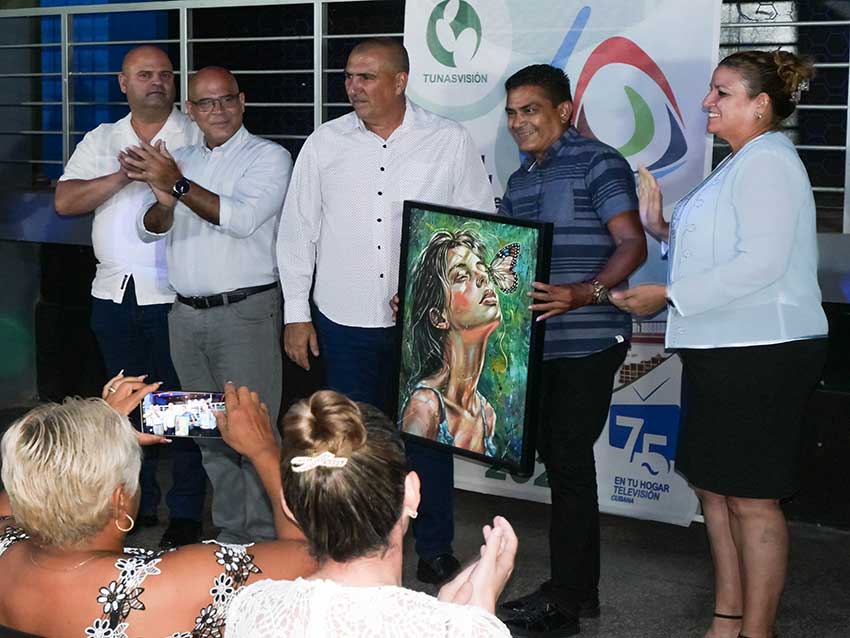
The National Telecenters Festival left behind a wealth of knowledge and emotions. We are especially pleased that TunasVisión, the regional channel, once again took first place among its counterparts in the country, earning the right to host the next edition while Solvisión and Canal Habana took second and third place, respectively.
The grand prize went to Al final del camino (At the End of the Road) by Televisión Serrana. In conversation with Ariagna Fajardo Nuviola, a documentary director who has left her mark on works such as this one, we appreciate her humility and willingness to tell the stories of ordinary people. There, from a mountainous geography, she brings rural daily life, with its nuances and riches, to the screen. "We have 32 years of sustained work behind us. Several generations have been trained in the warmth of the institution.
We work with children in schools, with adults, farmers... We project ourselves into the community and thus bring our audiovisuals to life. It is an exercise in resistance at a time when everything is becoming more complex, but also a form of loyalty to our own, because from there we tell the world our truths. This documentary is a cry, sometimes of anguish and sometimes stifled," she told 26.
Although “we are all winners, because we all serve Cuban television and the public,” as José Carlos Zaragoza Suárez, general director of this medium in the country, said, it was gratifying to see that several garlands went to our compatriots. In particular, journalist Gianny López Brito won several awards, including his prize for testimony with El mundo de Pablo (Pablo's World), a moving story about an autistic child and his family in their daily lives, co-authored with Waldina Almaguer.
In addition, Gianny received mentions in genres such as commentary and reporting, a third prize shared with Yelenis Hernández for the work Cornito: poesía y sollozos (Cornito: Poetry and Sobs), and first place in the interview category for Uno y otro (One and the Other), which he produced with Waldina Almaguer. The latter colleague, in turn, won the top prize in cultural programs with the magazine Claroscuro and a third prize for the children's program Cuchuplún.
Yunior García, also from Las Tunas, was recognized in the photography category for his work in Pasión poesía, a program that also won second prize in the cultural category, as did En clave tunera, a music program.
Reporter Natacha Díaz Bardón won second prize for Género Derecho in the New Format for Television category, and third prize for Ciudad limpia in the Public Service Message category.
In the news programs category, the award went to Tele Pinar for Conexión informativa; in the script category, to Picky Ferrer from Islavisión; and in the directing category, to Ariagna Fajardo. In historical programs, Telecristal won with Testigo de los tiempos (Witness of the Times), while Canal Habana won the top awards in sports and science, and technology programs. These are just a few of the winners, who defended their work among more than 300 entries from some 30 television stations.
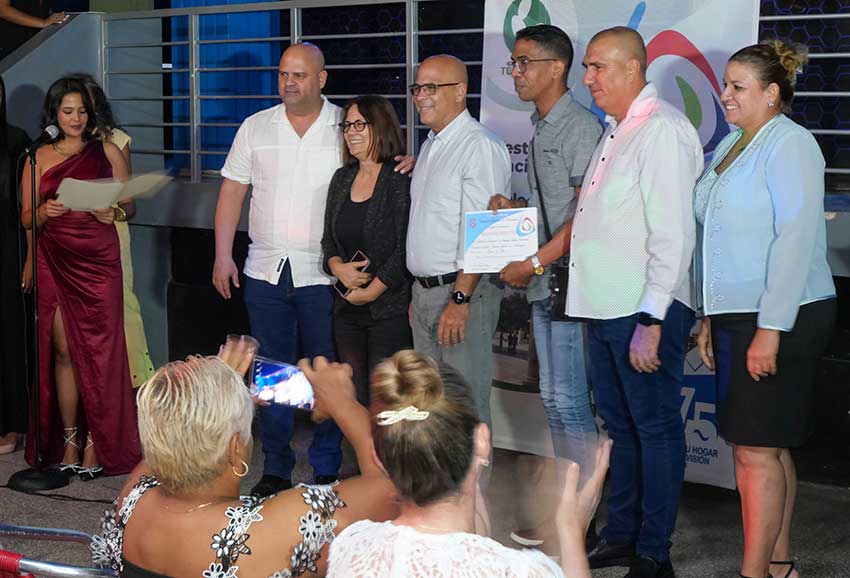
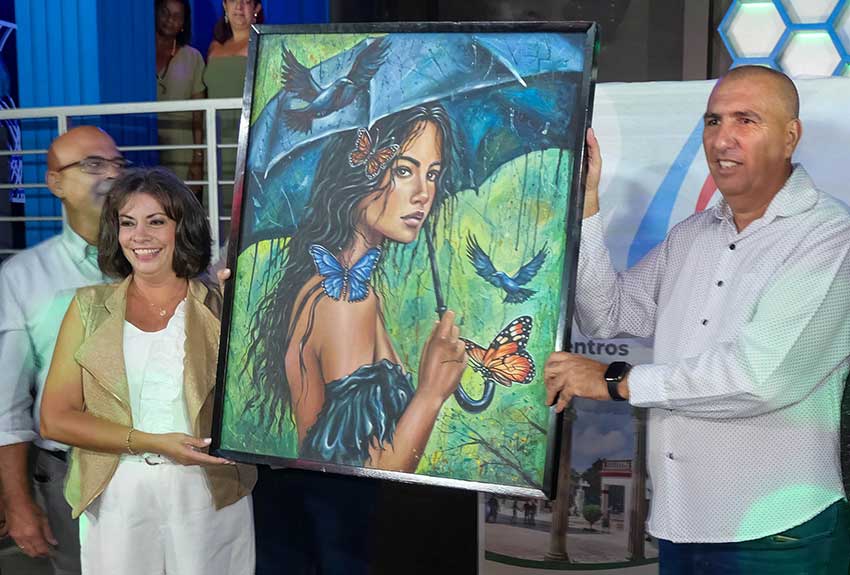
In addition, at the awards gala, which featured performances by talents from the music and entertainment marketing company Barbarito Diez, the 75th Anniversary Seal of Cuban Television was presented to personalities, institutions, and cultural events that have had a positive impact on our community, such as architect Domingo Alás, the Zabaleando sociocultural project, the Jornada Cucalambeana, and the founders of television in the country were recognized before the highest authorities of the province.
But beyond the awards, filmmakers such as Waldina appreciated that the program promoted the viewing of works, something that is not always explored in depth, while others, such as Gianny, praised the diversity of topics analyzed at different times. The theoretical spaces addressed social research, which is essential in the construction of programming; the challenges posed by social networks and artificial intelligence; cultural decolonization, among other topics. Meanwhile, there was a reflection on the need to find funding from local governments, which contribute to better work, the importance of highlighting life stories, and that every day the media should resemble the people more and more.
“This event allowed us to return to the essentials. We all need these lessons that allow us to perfect mechanisms and ways to better connect with the people. It is not possible to move forward without knowledge, experience, without applying science to audiovisual production... My congratulations to Las Tunas, which has always been known for its good work,” concluded Zaragoza, smiling.