

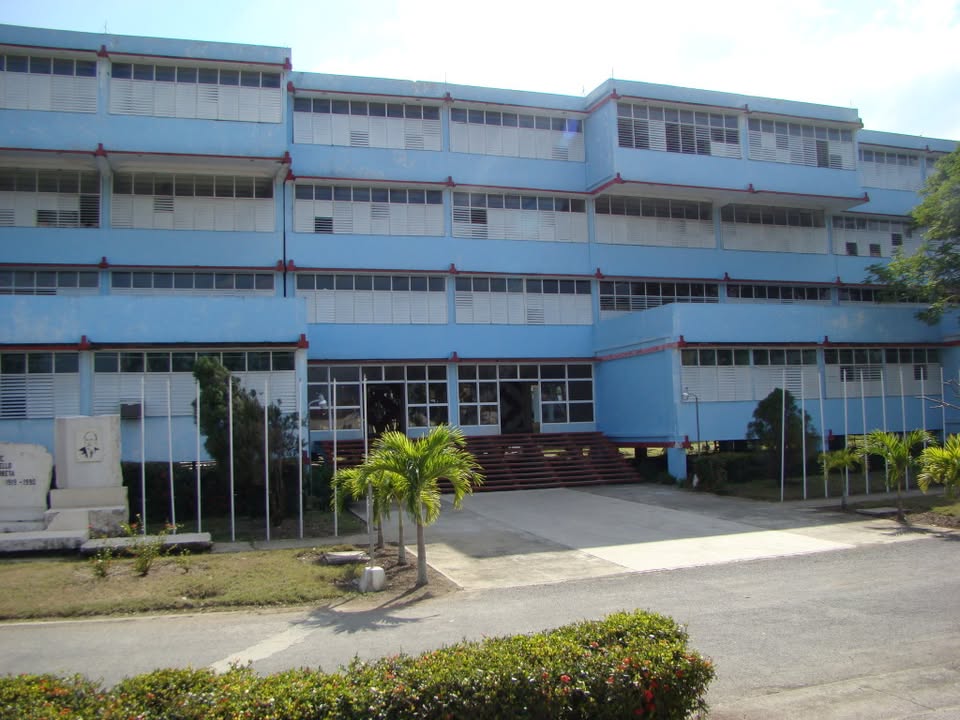
The University of Medical Sciences (UCM) of Las Tunas is experiencing an unprecedented start to the academic year. With a projected enrollment exceeding four thousand students, the institution of higher learning in the province faces the challenge of expanding its teaching capacity, decentralizing education, and ensuring that no young person with a vocation is left without training, even amidst a complex economic context.
Las Tunas, Cuba.– Dr. Enelis Reyes Reyes, rector of the UCM, explained the details of an enrollment process that has not yet closed. "We can extend the process until the eighth week of the academic year for those cases that may be outside the province or pending documentation for military service," she explained.
One key strategy has been "bringing the university to the municipalities," preventing families from having to travel to the provincial capital. However, the rector announced that a "second round of visits" will be conducted to reach those who were unable to access the municipal campuses.
The institution will house approximately 150 students at its main campus. Of these, 85 will be residents who will provide hospital care while completing their specialization, and the remainder will be undergraduate students from isolated areas. "We want to ensure that no student who has received a scholarship is left behind," Dr. Reyes emphasized.
The increase in enrollment and the decentralization—for the first time, municipalities will offer the introductory undergraduate course—have presented a significant challenge to the faculty. The UCM has had to incorporate facilitators beyond its tenured professors, as health technology programs, previously only offered in the provincial capital, will be taught in the municipalities as well.
"The university has undertaken the task of a phased methodological preparation, from the central to the municipal level, so that our professors are better prepared," stated the rector, who emphasized their commitment to this educational challenge.
The range of college opportunities is also expanding. The University of Medical Sciences is taking on the task of offering 32 degree programs and training courses, ranging from associate to bachelor's degrees.
The start of the academic year also brings the updating of introductory programs for new residents. "This year, the topics include updates on arboviruses, critical care, and emergency management. The introductory postgraduate course will be held in the main municipality, at the Ernesto Guevara and Pediatric Hospitals, as well as at primary care clinics.
"It is a school period of great challenges, in a context of many adversities, but ones we will know how to face," the rector summarized.