

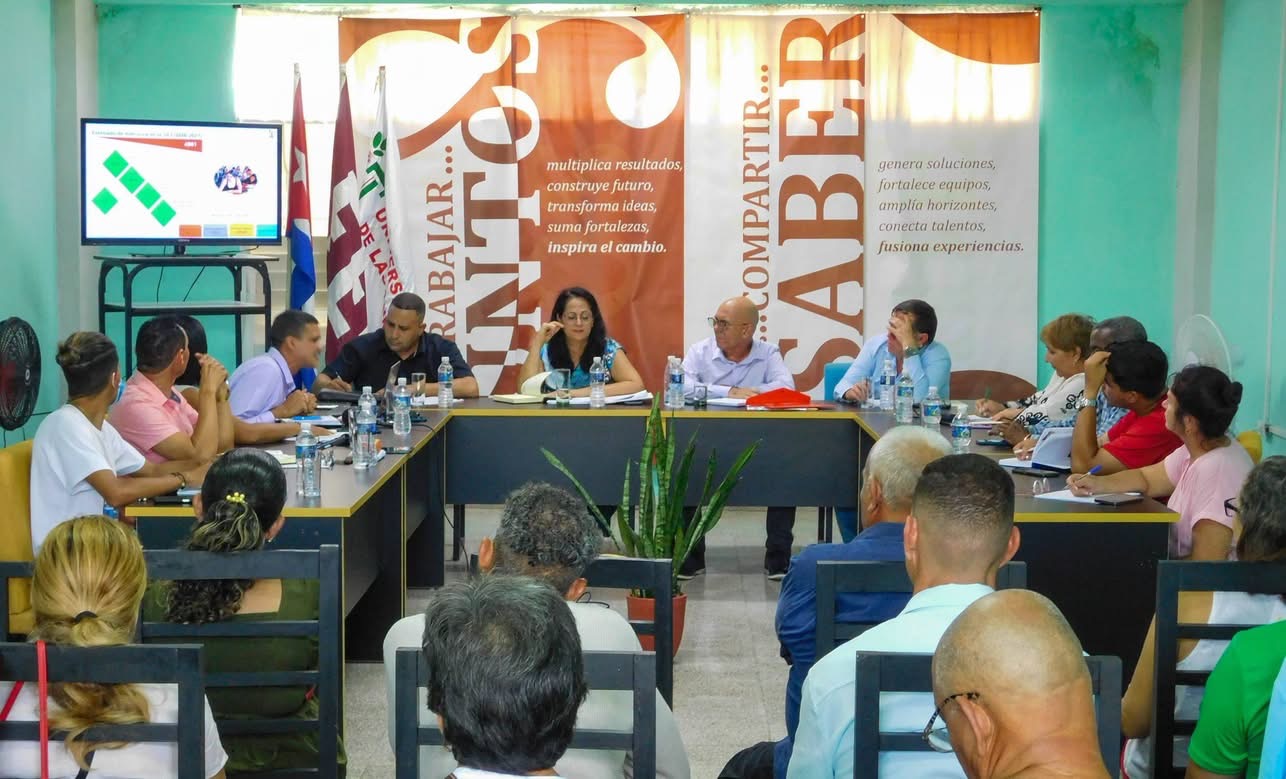
A commission from Cuba’s Ministry of Higher Education recently visited the University of Las Tunas, which was led by Deputy Minister Dr. C. Reynaldo Velázquez Zaldívar, accompanied by Director of Education Dr. C. Natalia Martínez Sánchez and David Lahera Rodríguez, an official from the Central Committee of the Communist Party of Cuba (PCC in Spanish).
Las Tunas, Cuba.- During the tour, they visited the “Faure Chomón Mediavilla” historical hall, where they learned about the life of the revolutionary and the legacy of this institution, which will celebrate its 30th anniversary in 2026. Subsequently, they held a meeting with the Board of Directors, senior staff, and workers to discuss preparations for the 2026–2027 academic year.
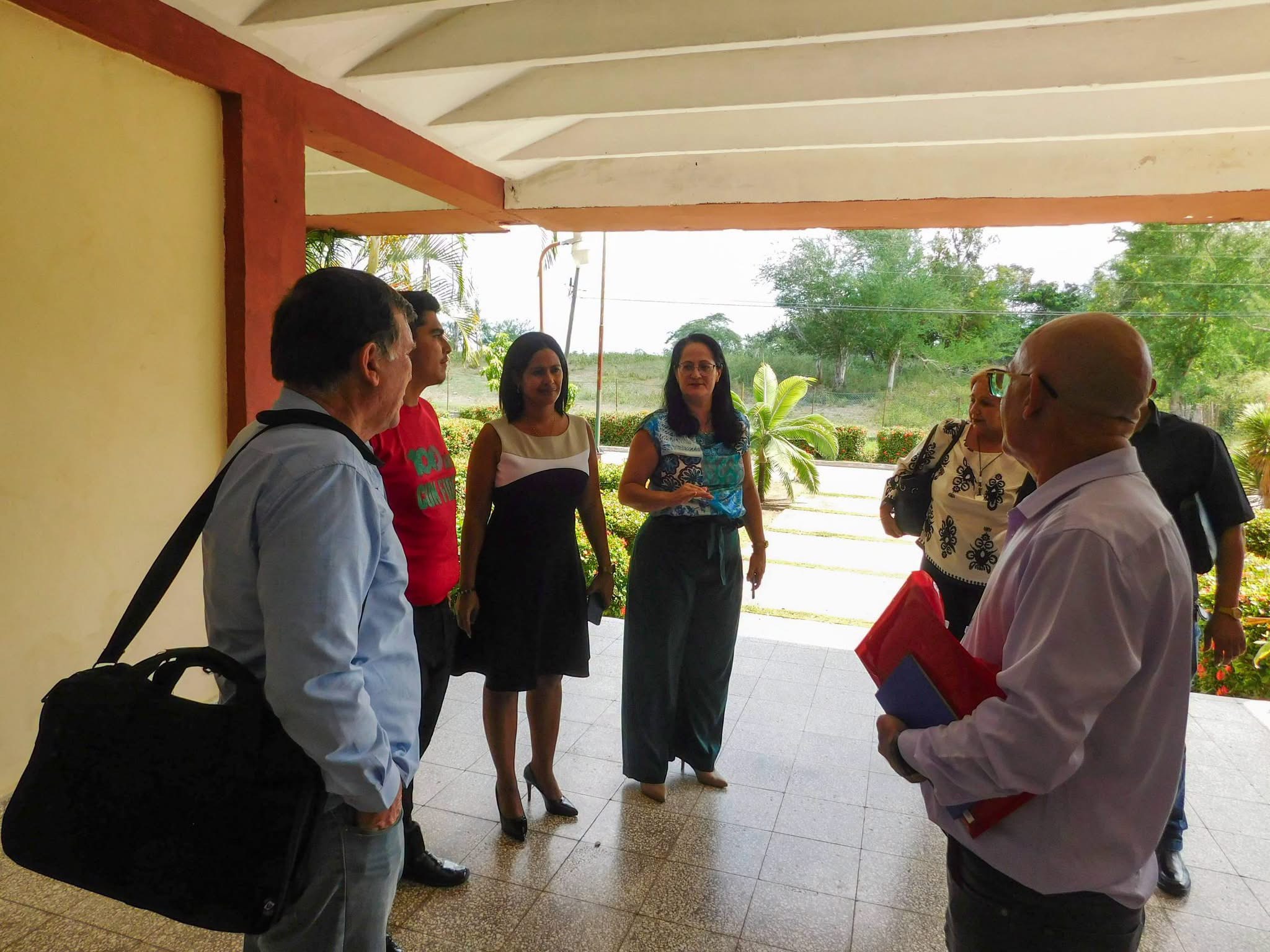 During their stay, the MES team was briefed on the academic planning that spans from the central campus to the Municipal University Centers (CUM in Spanish).
Doctor of Science Danis Figueredo Espinosa, Vice Rector in charge of educational processes, presented a detailed overview of the recently started academic term, highlighting the specific features of the hybrid model supported by information and communication technologies and artificial intelligence, as well as student support strategies, with priority given to incoming students and those in the final phase of their degrees.
The current status of the enrollment process was also discussed, with preliminary figures showing more than 4,961 students. These students are enrolled in 31 university degree programs and 5 short-cycle Advanced Technical Education programs, reaffirming the university’s commitment to the region. The strategic role of the municipal centers as pillars for regionally focused degree programs was also emphasized.
For her part, University President Dr. C. Yoenia Virgen Barbán Sarduy presented the University Administration’s plan for this new academic year, explaining the strategic priorities designed to ensure the success of the school year. In her remarks, she addressed the challenges of maintaining academic continuity, the ways to overcome them, the potential of the Community Youth Network, and the roadmap for implementing the 176 planned economic and social transformations.
At the close of the meeting, David Lahera Rodríguez emphasized that, despite the country’s economic difficulties, the process of higher education will never come to a halt. He stressed the need to maintain fluid and effective communication with the faculty and student body, actively involving them at every stage and recognizing that their contributions are essential for the continuous improvement of learning.