




















With the first cloud that colors the sky black, Anita crosses her fingers and hopes that the rain will not be too abundant, even if the dust, heat, and other excesses also overwhelm her. Her gaze is then lost in the strip of the river next to her house and she fears what new "cargo" she will be able to drag this time, that the capricious riverbed will land right on her shore.
For more than two decades she has shared the same "eclipsed fate". To the point of hating the season that begins in May, because it brings the downpours expected by most of the inhabitants of the province. As soon as the Hórmigo River -their unwanted guest- grows and accumulates solid waste, their home becomes an amalgam of stench that is difficult to breathe, no matter how much they are accustomed to it.
When the swarm of flies and the influx of mice -which reach considerable sizes, according to the neighbors- become unbearable, Anita picks up the phone. She starts calling all the institutions and "praying to the 11 thousand virgins" for someone to come soon and solve the problem.
"Many times it is the fault of the residents, who throw garbage into the river, they even throw debris into it, and we all pay the consequences no matter who did it. But come here one day, when the thing is at its peak, to see how the flies pick it up and you can't live with the bad smell. Imagine where there are children, sick people, it is not a whim, it is severe," admits the sexagenarian, with a grimace of disgust.
OLD STRATEGIES AND STENCH
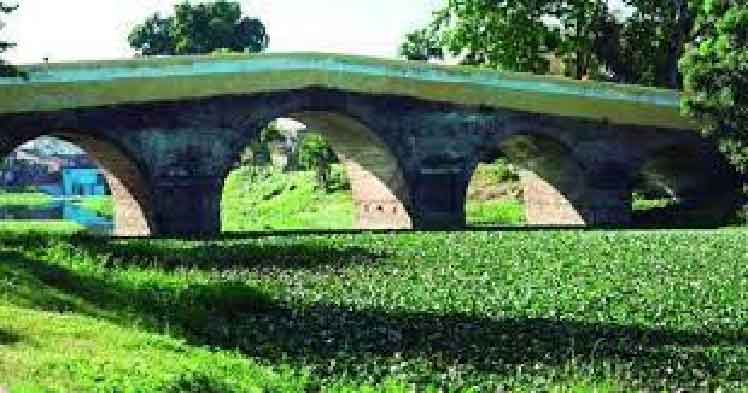
Like Anita, a good part of the population living near the René Ramos Street bridge, and other parts of the city, share the same situation with more or less tolerance. As soon as the rainy season begins, the complaints are more and more reiterative and the solution arrives, but never definitive.
Alcides Naranjo Perez, director of Maintenance and Investments in the Provincial Company of Aqueduct and Sewerage, commented to 26 that this is an old problem that worsens in some periods of the year and that is prioritized, above all, in the current epidemiological context that still does not achieve its stability.
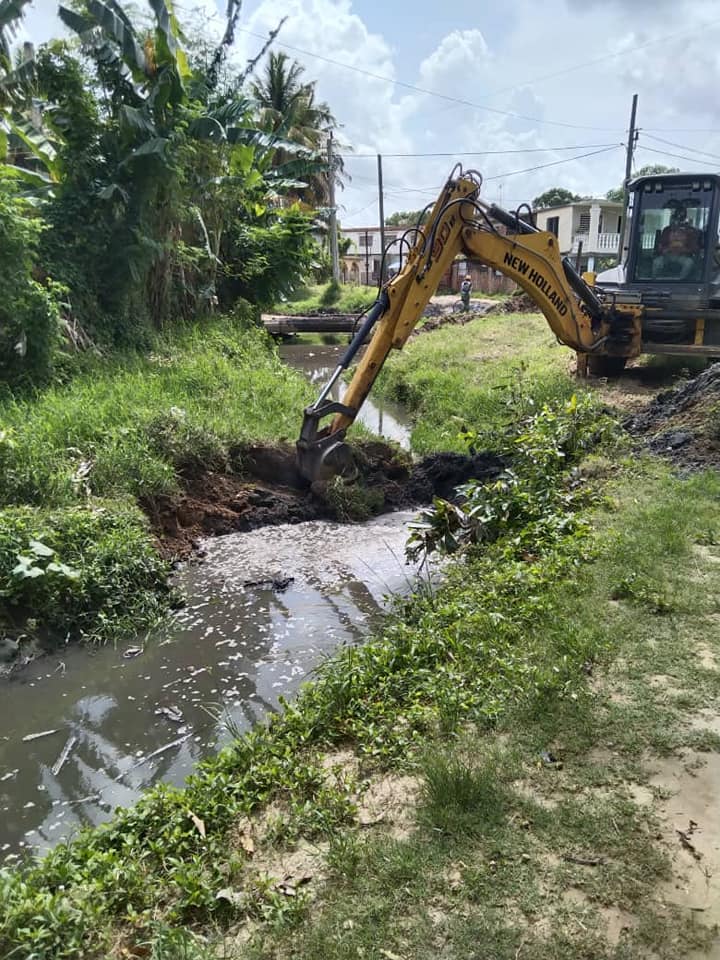
"Our collective has total responsibility for the sanitation of urban surface watercourses, of which there are more than 120 between ditches, rivers, gullies, or canals, emphasized the manager. It is in our social object and we give manual and mechanized treatment throughout the year.
"The Hórmigo River is the largest tributary of this city, it is about two kilometers long, it goes from the Railroad to the National Bypass and, therefore, it has the largest amount of houses around it. More than 80 percent needs sanitation with machines; however, we cannot reach many of its places because of obstacles that prevent the entry of the backhoe.
"Along the river, we found walls, fences, crops, extensions of houses poorly located, which do not allow the work to be done in-depth, remove the sediment and give it more capacity."
"I have to say that in the city we have received the support of a good part of the population that has removed the walls and even helped in the cleaning work, but not everyone cooperates, the biggest problem is given by the dumping of solid waste, and many people continue to incur in the same indisciplines, although they are also affected by the unhealthiness."
"We have a similar situation with the Ahoga Pollos River, which causes flooding in Gonzalo de Quesada Street, which has not been solved definitively due to the barriers that hinder the work."
Naranjo Perez points out that in the territory we do not have modern and effective machinery, but at the moment they have what is necessary to clean up the surface watercourses and a budget of around three million pesos to meet the goals of the current calendar.
"In the municipalities, we work hard too; we make manual work without difficulties. Here, in the urban area, we have been working recently and will continue to do so. During this rainy season, the river drags solid waste collected in the houses. We are aware of this, and we are preparing to give a timely response to our neighbors.
INDISCIPLINE OF THE WORST "VECTORS"
From the Provincial Water and Sewage Company, the call is for the residents to contribute to collective hygiene and eliminate dumping into the river, indiscipline that periodically causes much discomfort to the people who live on its banks.
Although the inspection bodies must ensure compliance with the rules established in this regard, the community emerges as a strength to take care of its environment and denounce those who violate it.
We know that alone we will not be able to give a definitive answer to this problem that has become historical," says Alcides. That is why we want to tackle it in a multisectoral way with the Agriculture, Physical Planning and Hygiene, Epidemiology, and Microbiology agencies. Our commitment is to seek solutions and avoid problems.
The Hórmigo River contributes to the water supply of the subsoil. Poor management of its course would contribute to groundwater contamination. In this province, one of the driest in Cuba, any problem in this respect would involve all the people, since our survival depends to a great extent on this resource.