
• Cuban Legislators Make a Working Visit to the Municipality of Majibacoa

    Cuban Legislators Make a Working Visit to the Municipality of Majibacoa

  • Hope Is Sown in the Fields of Las Tunas

    Hope Is Sown in the Fields of Las Tunas

  • “El Baturro” Reborn Under Shared Management

    “El Baturro” Reborn Under Shared Management

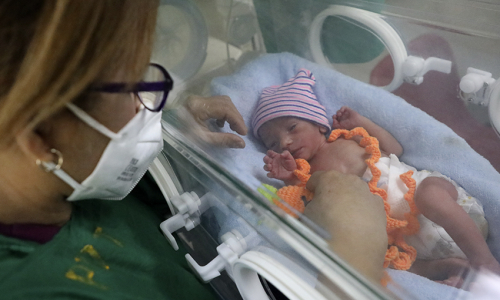
  • Heartbeats of Life: Following the Path to Tomorrow in Las Tunas’ Neonatology Unit

    Heartbeats of Life: Following the Path to Tomorrow in Las Tunas’ Neonatology Unit

  • Concert Music, Culture, and a City Awaking (+photos)

    Concert Music, Culture, and a City Awaking (+photos)

Las Tunas News

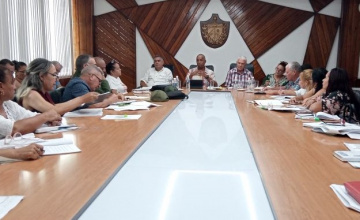
Las Tunas Receives Parliamentary Visit t…

A working group appointed by Esteban Lazo Hernández, President of the National Assembly of the People's Power (ANPP), is in Las Tunas to support and monitor the implementation of economic...

Las Tunas Celebrates City Anniversary

Activities marking Las Tunas City's anniversary will officially begin on the morning of September 23rd at Vicente García Park. The schedule includes panel discussions, concerts, heritage tours, bandstand performances, talks, tributes...

Yerenia and More Than Just “Old Papers…

We must cherish and respect our collective memory. A nation that fails to do so runs the risk of losing its essence, its light. Archives do not merely store information;...

Las Tunas Prepares to Celebrate Its 230t…

The city of Las Tunas is gearing up to commemorate the 230th anniversary of its founding and the 150th anniversary of the city's fire. This effort takes place against a...

New Students Join the FEEM

Driven by the conviction that every generation bears the responsibility of forging its own path, secondary education students in Las Tunas officially joined the Federation of Middle School Students (FEEM).

Renewable Energy: The Answer Cuba Needs

Changing Cuba’s energy mix is not merely an option among others. With the passage of time and the strengthening of the economic, commercial, and financial blockade imposed by the United States government...

We Recommend

Cuba News

Cuban President Reaffirms Priority of De…

President Miguel Díaz-Canel led National Defense Day activities on Friday at the Rampa Defense Zone, located in the Plaza de la Revolución municipality, where he reaffirmed that defense preparedness is...

Cuba Denounces Multidimensional Aggressi…

Cuban Foreign Minister Bruno Rodríguez Parrilla denounced at the UN on Saturday that his country is facing a multidimensional aggression by the United States government, a permanent, abusive, and ruthless...

Havana International Fair Returns in lat…

The 42nd edition of the Havana International Fair (FIHAV) will take place virtually from November 24th to 26th via the URL www.cuba.feriahabana.cu, the official platform launched by its Organizing Committee announced.

The Persecution of Cuban Medical Mission…

A fact has been revealed about Cuba that strikes anyone with the most basic sense of humanity: The infant mortality rate on the island rose from 4.0 per 1,000 live...

Statement by the Ministry of Foreign Aff…

The Ministry of Foreign Affairs of Cuba learned on Friday, September 18, through the press, of the surprising statement made by the Costa Rican Foreign Minister, Manuel Tovar Rivera, to...

New Solidarity and Anti-Blockade Caravan…

  Strengthening relations with Cuba, breaking attempts at isolation, and countering the U.S. blockade are the objectives of "Ruta a Cuba: Estar donde importa" (Route to Cuba: Being Where It Matters)...

World News

Features

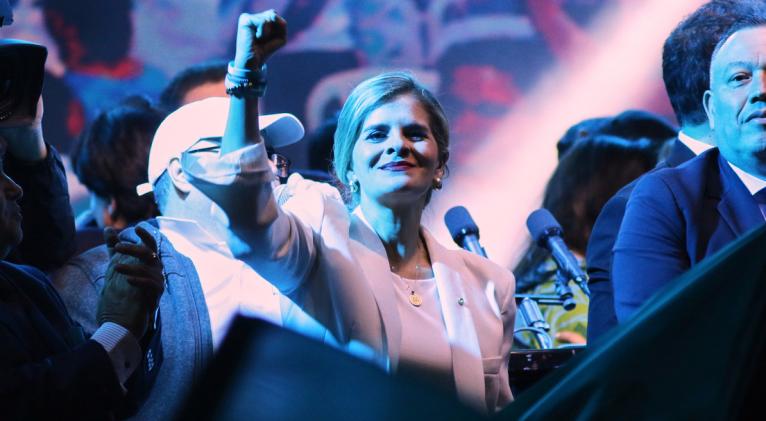
Laura Fernández Delgado, Costa Rica's president elect.

Laura Fernández, of the ruling Sovereign People's Party (PPSO - center-right), will be the next president of Costa Rica, according to provisional data from the country's Supreme Electoral Tribunal.

With 93.79% of ballots counted, Fernández won with 48.33% of the votes, followed by Álvaro Ramos of the National Liberation Party (PLN - center-left) with 33.42%.

Third place is held by Claudia Dobles of the Citizen Agenda Coalition, with 4.86% of the votes, closely followed by Ariel Robles of the Broad Front with 3.72%. Voter turnout was 69.10%.

In this way, Fernández secured the presidency in the first round after surpassing the 40% vote threshold.

Democracy Decided

"The people have spoken, democracy has decided. Costa Rica has voted for the continuity of change, a change that seeks to rescue and perfect institutions and return them to the sovereign people to create greater well-being and prosperity," stated the president-elect after the results were known.

"We have every right to celebrate the victory," she added, while criticizing the opposition, whom she labeled as "cannibalistic."

For his part, Álvaro Ramos conceded defeat and congratulated Fernández in a telephone call. "I wish Ms. Laura Fernández that God gives her much wisdom to govern, and we will support her when her decisions are for the good of the country and we will not when we disagree," he told his supporters.

More than 3.7 million Costa Ricans were called to the polls across the national territory to elect their president, two vice presidents, and the 57 deputies of the Legislative Assembly for the 2026-2031 term.

The electoral contest featured 20 candidates seeking to replace the current president, Rodrigo Chaves.

Meanwhile, the president of the Supreme Electoral Tribunal, Eugenia Zamora Chavarría, described the elections as "exemplary, free, and authentic" and emphasized the importance of these elections for the country's political and social life.

Who Is Laura Fernández Delgado?

Laura Fernández, 39, is a political scientist who rose to the political forefront as one of the most influential officials in Rodrigo Chaves' government, serving as Minister of Planning and later as Chief of Staff. From these positions, she coordinated economic policies and administrative reforms, according to local press reports.

She built her career as a legislative advisor and official linked to state reform projects until she was appointed to Chaves' cabinet in 2022. From there, she became one of the government's most visible officials, tasked with coordinating administrative policies and promoting institutional changes, including the so-called Jaguar Law—an initiative aimed at limiting controls on public works that was ultimately halted by the courts as unconstitutional.

The elections were held in a context marked by strong public attention to security, the economy, and governance, as well as the expectation of a key voter turnout to define the country's political course for the next four years.

The deterioration of public security is an issue that has moved to the center of citizen concerns, following an increase in violence linked to drug trafficking and organized crime—an unprecedented phenomenon in Costa Rica's recent history. (CubaSí)