


























|
|

Fruit trade between China and ASEAN countries has been thriving in recent years thanks to the increasing trade relations between the two sides.
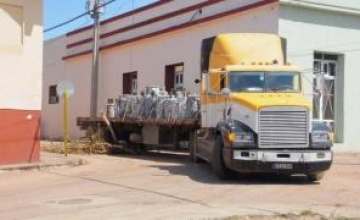
At a fruit trading center in Youyi township, Pingxiang, south China's Guangxi Zhuang autonomous region, there are always constant streams of trucks loaded with various types of fruits.
As the largest port city for fruit trade between China and ASEAN, Pingxiang saw nearly 1.65 million tons of fruit imported and exported in the first half of this year, up 15.36 percent year over year.
The bustling fruit business in Pingxiang is a vivid example of the thriving fruit trade between China and ASEAN. With the annual hosting of the China-ASEAN Expo, the full implementation of the Regional Comprehensive Economic Partnership (RCEP) among all 15 participating countries, and the deepening Belt and Road cooperation, the trade cooperation between China and ASEAN countries has been increasingly closer in recent years, with fruit trade becoming a highlight in the agricultural products trade between the two sides.
Currently, China is the largest export market for Vietnamese agricultural products, with Vietnamese fruits such as durian and dragon fruit being highly favored by Chinese consumers.
|
|

China is also a major destination for Thai fruits. Sixteen land ports have been permitted by the two sides to deal with the fruit trade.
Fresh food e-commerce platforms have set up vegetable and fruit procurement bases in Vietnam and Thailand, becoming new channels for local agricultural products to enter the Chinese market. In the first seven months of this year, Chinese e-commerce platforms reported a 48.6 percent increase in sales of Thai durian.
With the continuous addition of new fruit varieties from ASEAN countries approved to enter the Chinese market, more and more ASEAN fruits are being favored by Chinese consumers at more favorable prices.
Gao Lingyun, a researcher at the Institute of World Economics and Politics of the Chinese Academy of Social Sciences, attributed the booming fruit trade between China and ASEAN countries to multiple factors.
First, he said, the full implementation of RCEP has continuously released policy dividends, significantly reducing trade costs; second, under the RCEP framework, policies such as rapid inspection and quarantine have promoted the circulation of fruits and other agricultural products.
He also attributed the booming fruit trade to the increasingly strengthened infrastructure connectivity, the upgraded cross-border logistics system, and the diverse choices provided by ASEAN fruits for Chinese consumers.
|
|

Since the implementation of the RCEP on Jan. 1, 2022, agricultural products trade cooperation among member countries has become closer. According to statistics, due to the customs facilitation brought by the RCEP, China imported 46.61 billion yuan ($6.57 billion) of fresh durians from RCEP member countries such as Thailand and Vietnam in the first 11 months of 2023, 1.7 times higher than the amount in the same period of 2021, before the agreement took effect.
Furthermore, in recent years, with the implementation of major projects such as the New International Land-Sea Trade Corridor and the China-Laos Railway, cold chain and refrigeration facilities in the region have been continuously improved, providing important technical support for China's import of fruits. Today, it has become more convenient for ASEAN countries' fruits to enter the Chinese market.
As a "golden channel" of logistics between China and ASEAN countries, the China-Laos Railway has shown increasing significance since its operation. As of Aug. 22, 2024, the China-Laos Railway has transported over 43 million tons of goods, including 13,000 tons of Thai durians, bananas, and other fruits carried by cold chain carriages.
An industry insider pointed out that China and ASEAN countries have shown significant seasonal and category complementarity in fruit production. China excels in producing temperate fruits such as apples and pears, while ASEAN countries specialize in tropical fruits like mangoes and durians. The fruit trade between the two sides helps optimize the supply and distribution of fruits in the region.
A recent report by Vietnam's Nhan Dan Newspaper stated that Vietnam is currently the largest supplier of durians and fresh bananas to the Chinese market. The Chinese market is driving strong export momentum for Vietnamese fruits and vegetables.
The governor of Thailand's Chanthaburi Province Monsit Paisarnthanawat said that the development of the fruit industry has created a large number of job opportunities. Currently, there are tens of thousands of people working in the fruit industry in the eastern region of Thailand, and the income of farmers has increased. "We look forward to more and closer cooperation with the Chinese market," the governor added.
Currently, China is constantly working to widen market access, enhance customs clearance facilitation, and establish trading platforms such as the China Import and Export Fair, the China International Import Expo, and the China International Consumer Products Expo to further drive the continuous growth of fruit trade with ASEAN.
Gao said, that under cooperation frameworks like the RCEP, China and ASEAN countries will further improve and optimize existing cooperation mechanisms and platforms to deepen cooperation, thus creating better development prospects for ASEAN fruits in the Chinese market. (People's Daily)